
How to Prepare for a Panel Interview in 2026: The Panel-First System That Wins Over the Whole Room

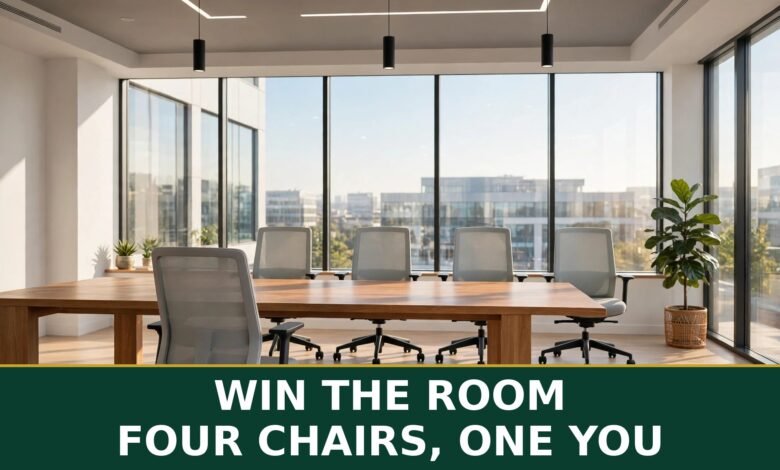
Picture it: you walk into the conference room, and four faces turn toward you at once. One of them is smiling. One is reading your resume. One is already writing something down, and you have no idea what. Your throat goes dry — and you haven’t even said hello yet.
That’s a panel interview, and it feels nothing like a normal one-on-one. In a one-on-one, you build a connection with one person. In a panel, every person in the room is scoring you on something different. The good news is that panels are predictable once you understand how they work. This guide shows you how to prepare for a panel interview with a system: decode the four chairs first, build one story per chair, and learn the room mechanics.
The quick answer
Yes, you can prepare for a panel interview — and the preparation is different from a one-on-one. A panel interview puts two or more interviewers in the room with you at the same time, usually two to six people. The system: first, find out who is on the panel and decode what each person is scoring. Second, prepare four or five stories, one aimed at each chair. Third, learn the room mechanics — start with the person who asked, sweep the room, close with the asker. Keep STAR answers to about two minutes, ask one question per panellist, and send each of them a different thank-you note afterwards.
1. Decode the four chairs first
Most candidates walk into a panel and see a crowd. You need to see four chairs — and four different jobs.
The hiring manager owns the decision. They care about two things: can you do the work, and will the team enjoy working with you? The HR or people partner scores values and judgment. The technical lead checks whether you can actually do the work. The future peer asks the simplest question of all: will working with you be easy or hard?
Here is the rule that changes everything: panels are consensus-based, so every chair holds a veto. One bad answer to the peer can outweigh a great answer to the manager.
Decoding starts before interview day. Email the recruiter and ask for the names and titles of everyone on the panel, how long it will run, and whether there will be a presentation or task. Then look each person up on LinkedIn or the company website, and note one detail about each of them. If the names never arrive, do it in the room: introduce yourself at the start, ask each person to share their name and role, and write them down. A panel is not the same as a group interview, where several candidates are interviewed together — our group interview guide covers that format separately.
2. Build one story per chair, not one per question
The biggest mistake candidates make is preparing twenty answers. Prepare four or five stories instead, each with a clear situation, one specific action you took, and a measurable result — and tag each story to a chair.
Take Maya, 26, applying for her first customer-success role after two years in retail. The angry-customer story, where she turned a shouting regular into a repeat buyer, goes to the peer and to HR. The queue-system story, where she reorganised the Saturday rota and cut waiting times, goes to the hiring manager. The product-knowledge story, where she learned the whole returns system in a week, goes to the technical lead. And her motivation story goes to everyone. If you need help finding yours, our guide to answering “what motivates you” shows you how to build it from a real day at work.
Build your introduction the same way, with the Present-Past-Future shape: where you are now, two skills you have built, and why this role. Keep it under two minutes. Then practise every story out loud, timed.
3. The room mechanics: one answer, three listeners
The mechanics are what separate a good panel candidate from a nervous one. Greet each person by name as you sit down, and write the names on your notepad in the order they are sitting.
For every answer, use the sweep: start by looking at the person who asked the question, include the other panellists with your eyes as the answer develops, and return to the asker when you close. Talk to the room, not at one person. Locking onto one panellist while ignoring the others is the most common body-language mistake in panel interviews.
Keep STAR answers to about one and a half to two and a half minutes. Sit up, keep your hands visible, and give yourself a two-second pause before answering — it looks thoughtful, not slow. And if you lose the thread halfway through, say so plainly: “Let me make sure I answer the heart of that — the key point is…” Interviewers forgive a restart.
4. The four hard moments
Every panel has at least one moment designed to test you. Four of them show up again and again, and each has a move.
The silent panellist. Someone in the room barely speaks and just takes notes. Don’t ignore them — include them in your eye-contact sweep, and direct one of your questions to them at the end. The quiet note-taker often holds the deciding vote.
The disagreement question. “Your manager wants X, your teammate wants Y — what do you do?” Don’t pick a side. Show the process: clarify what each side actually needs, surface the trade-off out loud, propose a way forward, and check it with both of them.
The repeated question. Two panellists ask you the same thing in different words. Answer it again, briefly, from a different angle — never say “as I already said.” They may be testing consistency, or the second person may simply have missed your first answer.
Rapid-fire. Short questions, one after another, no time to settle. Match their pace, keep your answers tight, and don’t fill the silence with extra words. If a question is really a stress test — “Why should we hire you over the other four people we saw today?” — pause, breathe, and answer the question that was asked, not the one you feared. Panels are often a later round — our second interview guide explains how the expectations change.
5. The questions you ask — one per chair
Never ask nothing. Prepare two or three questions, and direct them by role, so each panellist hears that you were thinking about them.
Ask the hiring manager: “What would success in this role look like in 90 days?” Ask HR: “What does the team do when someone is struggling in their first month?” Ask the technical lead: “What’s the hardest problem the team is working on right now?” Ask the peer: “What’s the one thing you wish someone had told you in your first week?” One question per chair is enough.
6. The virtual panel version
More panels now happen on video, and the room mechanics change with the screen. Set your camera at eye level, get strong light on your face from the front, use a plain background, and test your audio before the call. When you answer, look at the camera, not at the tiles — the camera is your eye contact. Use the tiles to learn names and keep your notepad map beside you, the same as in person.
If the connection stutters, say so immediately — “I lost the last few words, could you repeat that?” is a professional move, not a weakness. For the wider video-interview basics, our video interview guide covers lighting, framing, and nerves in detail.
7. After the room: one note per panellist
The interview doesn’t end when you leave the room. The same day, send each panellist their own short email — never one group email. Each note has three parts: one sentence of thanks, one detail from your conversation with that person, and one line connecting your story to the thing they care about. To the technical lead, reference the specific problem they raised. To the peer, mention the team detail they shared.
Four short, personal notes beat one long, generic one, because each panellist reads their own note and thinks: this candidate was listening to me. For the full timeline of what to send next and when, our follow-up guide lays out the thank-you, the nudge, and the close.
8. The night-before 10-minute drill
Preparation ends the night before, not the morning of. Ten minutes is enough: first, read your four-chair map once — names, roles, one detail each. Second, say your introduction out loud once, timed, and cut it if it runs past two minutes. Third, run three questions with two friends as a mock panel. Fourth, lay out your clothes, notepad, pen, resume copies, and a water bottle. Fifth, set two alarms.
On the morning, arrive ten minutes early, phone on silent. Walk in, greet each person by name, and remember the one thing the whole system is built on: you are not performing for a crowd. You are having four short conversations, one chair at a time.
Frequently asked questions
What is a panel interview?
A panel interview is an interview where two or more interviewers question one candidate at the same time. Panels are designed to be more objective than one-on-one interviews: multiple perspectives reduce individual bias, and specialists from different functions assess you at once.
How many people are usually on a panel?
Typically two to six interviewers, though some organisations — particularly in government, education, and healthcare — bring in larger panels for senior roles.
Should I make eye contact with everyone or just the person who asked?
Everyone. Start with the person who asked, include the others as the answer develops, and return to the asker when you close.
What if I don’t know who’s on the panel?
Ask the recruiter for names and titles before the day. If the names never arrive, introduce yourself at the start, ask each person to share their name and role, and write them down — that becomes your map for the interview.
Is a panel interview the same as a group interview?
No. In a panel interview, several interviewers question one candidate. In a group interview, several candidates are interviewed together, often with group tasks. The preparation is different: panels test how you handle multiple questioners, while group interviews test how you stand out among other candidates.
Conclusion
Learning how to prepare for a panel interview comes down to one shift: stop seeing a crowd, and start seeing four chairs. Decode what each chair is scoring, build one story per chair, sweep the room with your eyes, and follow up with one note per panellist.
Your Own FREE Website: Turn Interview Answers Into a Portfolio That Speaks for You
 🌐
Free Website
🌐 FREE Website — Turn Your Ideas Into Income
Disclosure: This article contains an affiliate link. If you purchase hosting through it, we may earn a commission at no extra cost to you.
If you want to earn a handsome amount monthly, make a website and start writing helpful articles on it — interview tips, career guides, the same kind of honest, useful advice you just read. Google traffic can turn into monthly income over time — but it takes consistent articles, week after week, not overnight magic.
Buy hosting through our link, send us your receipt through the JobyRoz contact page, and we will guide your basic business website setup for FREE. Disclosure: This article contains an affiliate link. If you buy hosting through it, we may earn a commission at no extra cost to you.

The Only Panellist Who Already Voted Yes
He sat through the whole interview without saying a word, asked no trick questions, and took no notes — and his verdict was clear the moment you walked in: you’re hired, and the salary is one biscuit an hour, paid in advance. He never cared about your resume. He only cared that you came home.
 🐶
Free Pet Guides
🐶 Love Dogs Too?
More money tools: Earnrove — pay calculators that turn your hourly rate into a real weekly number, and Clearove — clean-water guides for your home.
🧮Money Tools
Earnrove - Money Tools That Just Work