Sinking Funds for Beginners: The 2026 Setup Guide That Stops Big Bills From Wrecking Your Budget

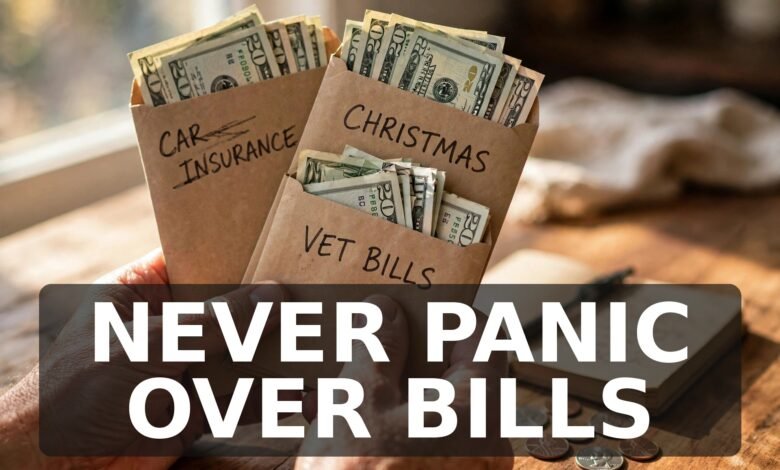
In a January 2026 NerdWallet survey, 35% of Americans admitted their 2025 holiday spending was financially irresponsible — they took on debt or overspent. December arrives every year; the money for it somehow never does.
That’s the exact problem sinking funds solve. Car insurance hits every six months. Christmas shows up every December. The vet, the annual Prime renewal, back-to-school supplies — these aren’t surprises. They’re appointments your wallet forgot to write down. Here’s how to set up sinking funds from zero: the 5-step system, real dollar math, the categories worth starting in 2026, and the mistakes that kill most funds by month two.
The Quick Answer: What Is a Sinking Fund?
A sinking fund is money you set aside a little at a time for a specific future expense you know is coming. If your car insurance costs $1,200 a year, you save $100 a month into your car insurance fund — and when the bill arrives, the money is already there. No scrambling, no credit card. Big predictable bills, chopped into small monthly payments you make to yourself.
The idea is old — companies and governments have used sinking funds for centuries — but in personal finance it was popularized by budget teachers like Dave Ramsey as part of giving every dollar a name. The logic: if you know a bill is coming, start paying it now in installments to yourself.
Take Maria, a nurse from Ohio I met in a budgeting group. Every December she put Christmas on a credit card, then spent until April paying it off. One January she started a Christmas fund: $600 goal, $55 a month auto-transferred after payday. That December she bought every gift in cash — her first debt-free Christmas as an adult. Her income never changed. The money just showed up on time because she’d been sending it ahead all year.
Sinking Fund vs. Emergency Fund: What’s the Difference?
People mix these up constantly. They do opposite jobs:
| Sinking Fund | Emergency Fund | |
|---|---|---|
| Purpose | Planned future expenses | True surprises |
| Timing | You know roughly when it’s due | Completely unpredictable |
| Examples | Car insurance, Christmas, vet checkups, annual subscriptions | Job loss, ER visit, furnace dying in February |
| Target | The estimated cost of each expense | 3–6 months of essential spending |
The test: if you could have seen it coming on a calendar, it belongs in a sinking fund — not your emergency fund.
How to Set Up Your First Sinking Fund in 5 Steps
Start with one fund and this process:
Step 1: List the big irregular bills in the next 12 months
Scan last year’s bank statements for the lumps: car insurance, holiday spending, vet bills, annual subscriptions, property tax, school costs, car registration. Circle everything over $100 that doesn’t come out monthly. Most households find 5–8.
Step 2: Put a real number on each one
Don’t guess — look it up. Last December’s statement has your real Christmas spending; your insurance declaration page has the exact premium. For fuzzy ones like car maintenance, take last year’s total and add 10%. A fund built on a fantasy number collapses fast.
Step 3: Do the only math involved
Total cost ÷ months until it’s due = monthly amount. $1,200 insurance in 12 months means $100 a month. A $600 Christmas fund started in March means $60 a month for 10 months. If the number doesn’t fit your budget, fund fewer categories — two fully funded bills beat eight half-funded ones.
Step 4: Give the money its own home
Non-negotiable: the fund cannot live in your checking account. Money in checking gets spent. Open a separate high-yield savings account — many let you create free named “buckets” for each fund — or use cash envelopes if you’re tactile.
Step 5: Automate it on payday
Set an automatic transfer for the day after each payday, before you can “decide” anything. Manual saving relies on willpower; automation turns the fund into just another bill — except this one pays future-you.
Sinking Fund Categories Worth Starting in 2026
Start with the ones that have hurt you before:
- Car insurance: $1,200/year → $100/month. The classic first fund — fixed, predictable, painful when it lands unplanned.
- Christmas & holidays: $600/year → $50/month. Remember the NerdWallet stat: a third of Americans went into debt over the holidays. This fund is the antidote.
- Car maintenance: $600/year → $50/month. Tires, oil, brakes, the weird rattling noise.
- Vet & pet care: $360/year → $30/month. Checkups, flea meds, plus a cushion for the 2 a.m. “he ate WHAT?” visit.
- Annual subscriptions: $240/year → $20/month. Streaming, Prime, antivirus, cloud storage — death by a thousand renewals.
Notice: you’re already spending this money — just in panicked lump sums. Sinking funds simply fix the timing.
7 Mistakes That Kill Sinking Funds
Most funds die from these, not bad math:
1. Starting with too many funds. Twelve categories on day one is a second job. Start with one to three; add more once the habit is boring and automatic.
2. Raiding the fund for fun money. The Christmas fund is not a concert-ticket fund. Every raid teaches your brain the fund is optional.
3. Guessing the target number. “Christmas will probably be like $300,” said everyone who spent $700. Check last year’s actual spending.
4. Keeping it in checking. Invisible money gets spent. If the fund shares an account with grocery money, it isn’t a fund — it’s a hope.
5. Skipping months and “catching up later.” Later never comes. If money’s tight, shrink the contribution; don’t skip it.
6. Treating predictable bills as emergencies. Insurance due in June is not a June emergency. That’s a sign you need more sinking funds, not a bigger emergency fund.
7. Never automating. A fund you have to remember to feed is a fund that starves. Payday transfer, automatic, or it doesn’t happen.
Sinking Funds on a Tight Budget: Start With $10
If your budget has no slack, here’s the tight-budget version: pick ONE fund and fund it with $10–$25 a month. $25 a month into a vet fund means $300 waiting when your dog needs care — the difference between a calm vet visit and a credit-card panic.
Seed that first fund with one month of plugged leaks — a no-spend month works perfectly — or pair it with our 52-week money saving challenge. Once you watch a fund cover a bill in full, protecting the next $50 a month gets a lot easier.
Why Sinking Funds Actually Work
There’s a reason “just save more” fails and sinking funds don’t: money with a name is harder to steal from yourself. Psychologists call it mental accounting — we treat labeled money as already spent, which is exactly the point.
It also kills the worst budgeting emotion: the ambush. Most money stress isn’t about being poor — it’s about being surprised. Sinking funds convert surprise into schedule. When the bill arrives and the money is already there, you don’t feel rich. You feel something better: unbothered.
Frequently Asked Questions
How much should I put in a sinking fund each month?
Divide the total expected cost by the months until you need it — $1,200 over 12 months is $100 a month. Base it on actual past spending, not a guess, and fund fewer categories fully rather than many categories halfway.
Are sinking funds different from an emergency fund?
Yes. Sinking funds cover planned, predictable expenses with known due dates (insurance, holidays, vet checkups). Emergency funds cover true surprises you can’t put on a calendar (job loss, ER visits). Mixing them up drains the fund meant for real disasters.
How many sinking funds should I have?
Start with one to three — the bills that burned you worst. Most households eventually run five to eight. Past ten, each fund gets too thin to matter. Add new ones only when the current funds run on autopilot.
What is a good first sinking fund for beginners?
Car insurance: fixed amount, known due date, and the pain of paying it unplanned is fresh in everyone’s memory. Christmas is a close second — it’s the bill most likely to land on a credit card.
What is the sinking fund method Dave Ramsey talks about?
The same concept from his budgeting teaching: save a little each month for known upcoming non-monthly expenses, as part of giving every dollar a job. Instead of being surprised by predictable bills, you pre-pay them to yourself.
The Bottom Line
Sinking funds aren’t exciting, and that’s the point. Start with one fund this week — pick the bill that scares you most, do the division, open the separate account, automate the transfer. The calmest money feeling in the world isn’t having a lot of it. It’s having it exactly when you need it.
For more, browse our Personal Finance guides — including budgeting systems built for freelancers and irregular paychecks.
Turn Your Budget Wins Into a Website That Pays You
 🌐
🌐Free Website
🌐 FREE Website — Turn Your Ideas Into Income
Want a handsome monthly income? Publish helpful articles consistently and let Google traffic grow into real earnings — steady work, never overnight magic. We never guarantee earnings.
Disclosure: This article contains an affiliate link. If you purchase hosting through it, we may earn a commission at no extra cost to you.
Want your own monthly income stream? Start a website and publish helpful articles regularly — money guides, how-tos, things people actually search for. Google traffic can turn into monthly income over time. It takes consistent publishing, not overnight magic, and no earnings are guaranteed — but every big site started with article one. Buy hosting through our link, send us your receipt via the JobyRoz contact page, and we’ll guide your basic business website setup for FREE.
Disclosure: the Hostinger link above is a referral link. If you purchase through it, we may earn a commission at no extra cost to you — it helps keep our guides free.

Meet the Reason Your Sinking Funds Exist
 🐶
🐶Free Pet Guides
Quick question:
Small leak to plug first? Read Clearove’s clean-water guides — ditching bottled water can fund your first $25-a-month sinking fund.
🧮Money Tools
🧮 Earnrove — Free Money Calculators