How to Make Money Flipping Items for Beginners in 2026: The $100 First-Flip System (No Experience, No Warehouse)

Flipping items sounds like something other people do — the ones with a garage full of furniture and a sixth sense for bargains. I thought that too, until a friend sold a coffee maker she’d stopped using and made $35 in an afternoon. No warehouse, no business loan. Just a phone, a clean photo, and a listing that answered the buyer’s only question: is this worth my money?
That’s what flipping is. You buy something for less than it’s worth — or sell something you already own — and resell it for more. The gap is your profit. Beginners can learn how to make money flipping items for beginners without experience or a store, and without risking a paycheck. Start small enough that a mistake costs $5, not $500.
This guide gives you a four-week system. Week one, sell things you already own. Week two, pick one category and spend a strict $50. Week three, learn the fee maths. Week four, decide whether to keep going or scale up.
The Quick Answer: Can a Beginner Really Make Money Flipping?
Yes — if you start with your own stuff and buy only what you’ve already checked. Flipping items for profit starts with $50 and a phone, according to flip.ink’s 2026 beginner guide. Sharetown’s 2026 guide puts the bar lower: under $100 and one weekend to list your first five items. No warehouse or license on day one — just a phone camera and patience.
What you won’t get is overnight money. EarnifyHub’s April 2026 guide reports part-time resellers earning $500–$2,000 a month at 5–15 hours a week, with margins of 30–300%. That’s their reported range for people who stuck with it, not a promise for your first month.
Week 1: Sell 5 Things You Already Own
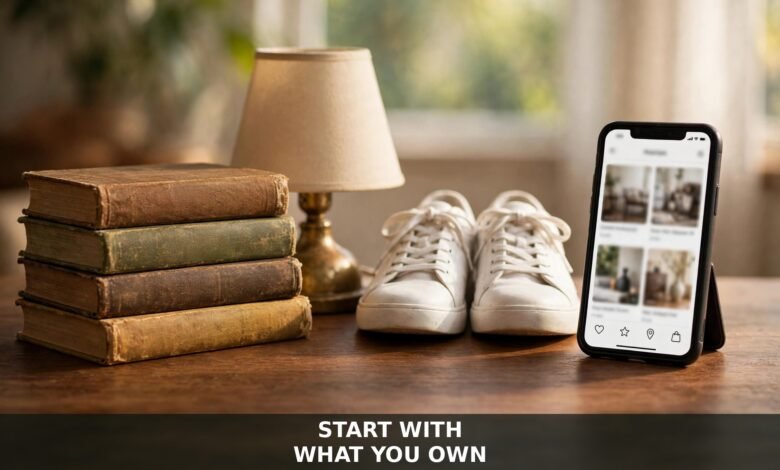
Don’t buy anything in week one. Find five things in good condition you haven’t touched in months: a jacket that doesn’t fit, a board game your kids outgrew, a lamp, the blender you replaced. The inventory costs nothing, so a slow sale teaches a lesson instead of costing money. You learn the whole process — photos, listing, messages, shipping or meetup — with zero pressure. And the cash becomes your flipping budget. UnderpricedAI makes the same point: sell your own stuff first.
Photos matter more than fancy words. A phone camera and a white bedsheet as a background is enough, per UnderpricedAI. Wipe the item down, photograph it in daylight near a window, from every angle — including any scratch. Buyers trust sellers who show the flaw. Write the listing like you’re texting a friend: brand, size, condition, why you’re selling.
Price each item by checking what the same thing actually sold for — not what others are asking. Search the platform, tap “sold listings,” and price near the middle of what real buyers paid. List all five in one weekend: that’s the Sharetown benchmark. Then watch. Which item got views in an hour? Which sat silent? That feedback is worth more than any course.
Week 2: One Category, a $50 Budget, and the Sold-Listings Rule
Once your first five are listed, pick exactly one category and learn it properly. Flip.ink’s guide puts it bluntly: depth beats breadth. The best starter categories have steady demand and easy shipping: books, clothing, small electronics, and home goods.
Books are the quietest winner. Thrift stores sell most books for $1–$3, and flip.ink notes textbooks, technical manuals, niche hobby books, and out-of-print titles regularly sell for $20–$100 or more. Scan the barcode, check sold prices, and walk away from anything that would sell for less than three times what you’d pay.
Clothing works differently. Thrift stores usually price most clothing at $3–$8 regardless of brand, per flip.ink — that’s the opportunity. Premium labels command real prices: Patagonia, North Face, vintage Nike, Lululemon, Free People, designer labels, vintage band tees. The catch is condition: a stained jacket from a great brand is still a stained jacket.
Here’s the rule for week two: never buy without checking three sold listings first. Not active listings — sold ones. Active listings show what sellers hope to get; sold listings show what buyers actually paid. If three identical items sold for $18, $22, and $25, the middle is $22, and your price should sit about 10% below it — around $20, per Sharetown. Your budget is $50, a hard ceiling. Spend it slowly, only on items that pass the test with a clear margin after fees.
Week 3: Fee Maths and the 7-Day Pricing Rule
Here’s where most beginners quietly lose money: they celebrate the sale price and forget the fees. On eBay, fees run to roughly 13% of the total sale including shipping, per EarnifyHub — so a $30 sale keeps about $26 before shipping. Facebook Marketplace charges nothing for a local cash sale, which is why it’s best for bulky items you don’t want to ship.
Do the maths before you list, every time. Sale price minus fees, minus shipping, minus what you paid, minus packaging — that’s your real profit. Under $5, and the flip probably isn’t worth your time unless you’re clearing space. Keep a note on your phone per item: cost, sale price, fees, days to sell.
Then there’s the 7-day pricing rule. If an item hasn’t sold in seven days, something is wrong — usually price or photos. Check whether similar items sold meanwhile. If they did and yours didn’t, drop the price 10–15%, add a better photo, and give it another week. Still stuck? Move it to another platform or accept less and free the shelf.
Each platform has a natural home. EarnifyHub’s 2026 guide: eBay for electronics and collectibles, with 130 million-plus buyers; Poshmark for clothing; Mercari for general items; Facebook Marketplace for local sales. A vintage camera belongs on eBay; a barely worn coat does better on Poshmark; a coffee table does best on Marketplace. Furniture and fitness equipment resell fastest — most flip in 7–14 days at 2–4 times cost, per Sharetown — but only take pieces you can store and move.
Week 4: The Keep-or-Scale Test (and a Realistic 30-Day Table)
By week four you’ll have your own results. Did I enjoy this, or did every listing feel like a chore? Did my items sell within two weeks? After fees, did I make money? Three yeses means a side hustle worth growing. Two noes means flipping might not be your thing — and that’s fine. You spent $50, learned a skill, and cleared a closet.
If you’re scaling, do it slowly. Reinvest profits instead of adding fresh money, keep the one-category focus for another month, and keep the free-inventory habit: curb finds and garage-sale leftovers beat paid wholesale for a first month, per Sharetown.
| Week | What you do | Typical result |
|---|---|---|
| Week 1 | List 5 items you own | 2–3 sell; $40–$90 seed money |
| Week 2 | Buy 3–5 items in one category with $50 | Items listed; first resale within days |
| Week 3 | Fee maths + price cuts on slow items | 2–4 more sales; profit per item $8–$25 |
| Week 4 | Review your log; keep or scale | Month total roughly $100–$250 profit |
That range is modest on purpose — illustrative numbers, not a promise. The people who reach the higher reported ranges — like the $500–$2,000 a month EarnifyHub cites for part-timers — got there by repeating this cycle for months, not by finding one magic item in week one.
Mistakes That Cost Beginners the Most
Buying before checking sold prices is the big one. It’s tempting in a thrift store — the item feels cheap, the brand looks good. Then you get home and find it sells for $2 more than you paid. Check first, buy second, every time. Second mistake: buying too much, too fast. Start with five. Finish those five. Third: bad photos. Daylight, a plain background, and every angle — including the flaw — sells faster than a clever title.
Safety note: meet local buyers in a public place in daylight, take a confirmed payment first, and never share your home address. For shipped sales, use tracked postage.
If flipping clicks, the skills transfer. The same eye for value applies to digital products — see Sell Canva Templates Online in 2026: The 7-Day Starter-Shop Guide (No Design Degree Needed). For listing help, Best AI Tools for Side Hustles 2026: 12 Beginner Ways to Start With $0 covers free photo and description tools. Teens should check the age rules in Online Jobs for Teens in 2026: 12 Real Ways to Earn Before You’re 18 (Age Rules First). And if flipping isn’t your thing, try Work From Home Jobs With No Experience: 20+ Legit Roles That Pay in 2026 (No Scams) or browse the Online Earning category.
Frequently Asked Questions
How much money do you need to start flipping items?
You can start with $20–$50, per UnderpricedAI; flip.ink puts it at $50 plus a smartphone. Cheapest start is $0: sell five things you already own, then use that money as your budget.
What items sell best for beginners?
Books, clothing, small electronics, and home goods. Books bought for $1–$3 can sell for $20–$100+ as textbooks or out-of-print titles, per flip.ink. In clothing, Patagonia, North Face, vintage Nike, and Lululemon hold value best. Furniture flips fastest — 7–14 days at 2–4 times cost, per Sharetown — but needs space.
Where do you sell flipped items?
Match the item to the platform. eBay suits electronics and collectibles, with 130 million-plus buyers, per EarnifyHub. Poshmark suits clothing, Mercari general items, and Facebook Marketplace local sales — free for a local cash sale.
Is flipping items profitable?
It can be, but profit depends on buying right, pricing from sold listings, and accounting for fees. EarnifyHub reports margins of 30–300% and part-timers earning $500–$2,000 a month — their reported range, not a guarantee. A realistic first month is closer to $100–$250 profit.
Do you need a business license to flip items?
For most beginners selling their own things and a few thrift finds, no. Once flipping becomes a regular income stream, your state or city may require a business license or resale certificate, and you’ll need to report the income. Keep records from day one and check local rules before scaling up.
The First Flip Is the Hardest One
So start this weekend. Pick five things from your own home, photograph them in daylight, and list them. That one afternoon teaches you more than a month of reading about flipping. If the first sale lands, you’ll know what to do next: buy one good item, check three sold listings, price it 10% below the middle, and do it all again.
Your Next Flip Could Be a Website That Pays You Every Month
If flipping taught you one thing, it’s this: things you already own can turn into money when you put them in front of the right people. A website works the same way — except instead of one buyer and one sale, the same helpful page can bring in visitors from Google day after day, month after month.
 🌐
Free Website
🌐 FREE Website — Turn Your Ideas Into Income
Disclosure: This article contains an affiliate link. If you purchase hosting through it, we may earn a commission at no extra cost to you.
Want to turn that into a handsome monthly income? That’s the second half of the idea. Make a website and start writing helpful articles on it — the kind of honest, practical guides people actually search for, just like the flipping tips above. Google traffic can turn into monthly income over time, but it takes consistent articles, not overnight magic. Nobody can promise you a number, and we won’t. What we can say is that the people who publish useful content week after week are the ones who give themselves a real chance.
Buy hosting through our link, send us your receipt via the JobyRoz contact page, and we will guide your basic business website setup for FREE. No jargon, no upsell — just a hand getting you started.
Disclosure: This section contains an affiliate link. If you buy hosting through it, we may earn a commission at no extra cost to you.
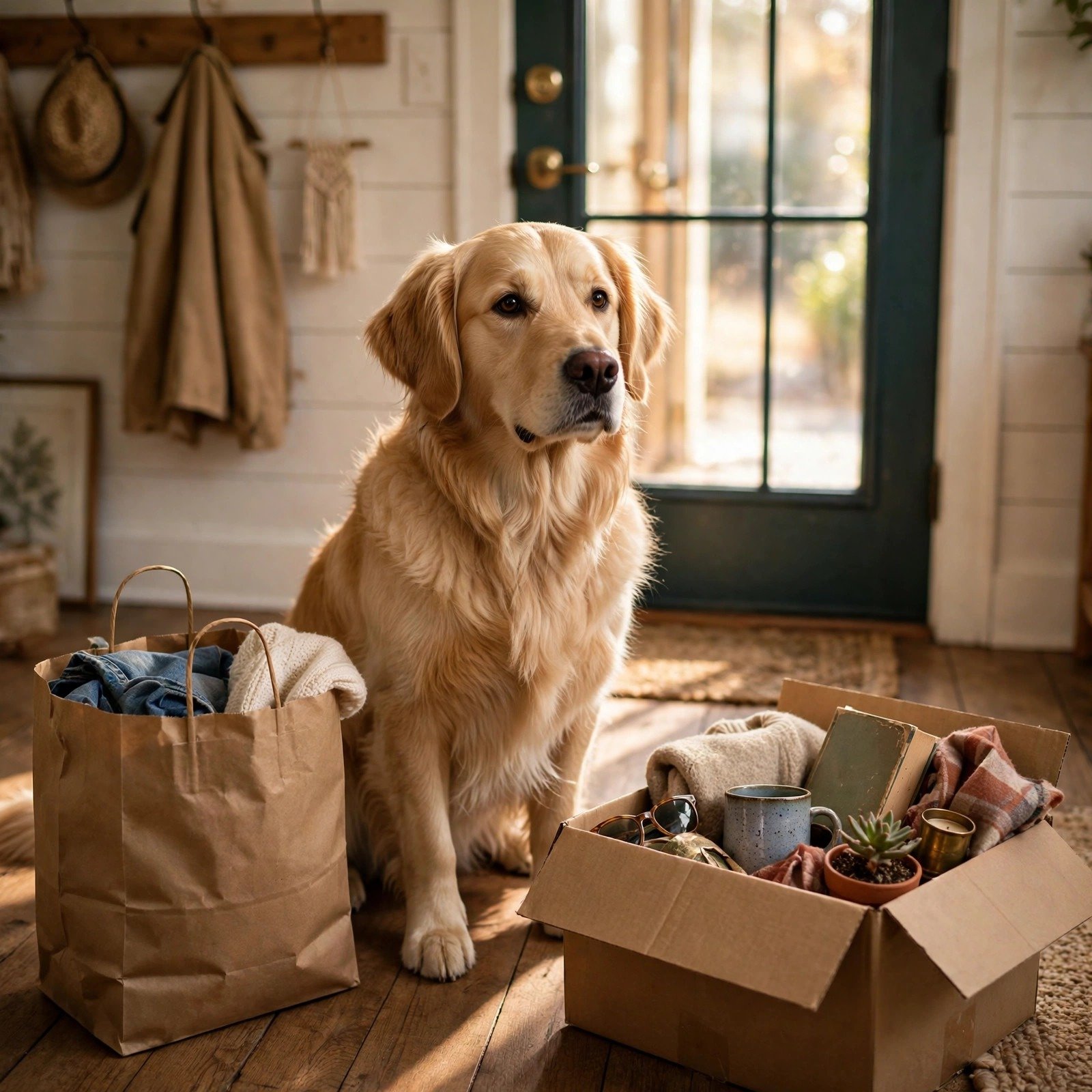
The Quality-Control Inspector Who Works for Treats
Every flipper needs a second pair of eyes — and ours has four paws and very strong opinions about squeaky toys. While you sort thrift finds by the front door, your golden retriever is already sniffing each bag, guarding the box, and deciding which “vintage” treasure is actually a chew toy in disguise.
 🐶
Free Pet Guides
🐶 Love Dogs Too?
Before your next flip, run the numbers properly — Earnrove.com has free calculators and money tools that make fee and profit maths take seconds, not a spreadsheet headache. And while you’re sorting secondhand treasures, spare a thought for what’s in your glass: Clearove.com covers clean, great-tasting water at home, so the coffee you sip between listings tastes as good as the profit feels.
🧮Money Tools
Earnrove - Money Tools That Just Work