
That scratched dresser on your neighbor’s curb isn’t trash. It’s about $170 of profit, if you know what you’re looking at. A friend of mine turned a $60 Facebook Marketplace dresser into $275 in one weekend. No workshop, no loan — just a garage corner and a free Saturday.
That’s furniture flipping: buy a solid piece for less than it’s worth, fix the cosmetic problems, and sell it to someone who won’t pay $600 at a furniture store. The gap is your profit — on a good dresser, $100 to $350. This guide shows you how to make money flipping furniture for beginners: one buy rule, one profit formula, one dresser, one proper sale. Do that once and you’ll know whether flipping is for you — before you’ve risked real money.
The Quick Answer: Can a Beginner Really Make Money Flipping Furniture?
Yes — if you buy right. A flipped dresser typically sells for $175 to $450, and good flippers buy the piece for $30 to $80, according to Sharetown’s 2026 flipping guide.
Start with $100 to $300 for a basic kit — cleaning supplies, sandpaper, brushes, paint, and a screwdriver — and one piece of furniture. Most of that kit lasts for five flips.
What you won’t get is overnight money. Published case studies put hobby flippers at $0 to $500 a month doing one or two pieces, and steady flippers at $500 to $1,500 a month doing four to eight. Your first flip is a test, not a salary.
Step 1: The Buy Rule That Protects Your Profit
Here’s the rule, and it’s non-negotiable: never pay more than 30 to 40 percent of the price you expect to sell for. If a refinished dresser sells for $250 in your area, your maximum buy price is $75 to $100.
How do you know what it will sell for? Check sold listings, not asking prices. On Facebook Marketplace, search for the same type of piece — “solid wood dresser” in your city — and look at what similar pieces actually sold for. Asking prices are wishes; sold prices are facts. Price your finished piece near the middle of three sold listings.
Target a sell price two to three times your total cost. If sold listings cap that piece at $150, walk away. There will be another dresser next weekend.
Step 2: The 6-Cost Formula — Run It Before You Buy
Before you hand over any cash, add up six cost buckets. Buy price ($10 to $200 for a beginner piece); supplies ($5 to $60 — paint, sandpaper, hardware, cleaner, wax or stain); repair ($0 to $150 if you outsource a wobbly leg or a missing slide); transport (gas, a borrowed truck, a delivery fee — the one everyone forgets); time (your hours, valued honestly); and fees (Marketplace local cash sales cost nothing, which is why furniture belongs there).
The formula is simple: sell price minus (buy + supplies + repair + transport + time cost) equals your real profit. Benchmark: a 40 to 60 percent gross margin; casual flippers accept 25 to 35 percent. Below 20 percent, one price drop wipes out the profit.
Here’s a real example. Maya, 27, in Austin, found a solid-wood dresser on Marketplace for $60. Supplies cost her $45 — paint, sandpaper, new knobs, and a top coat. She spent five hours on it across a weekend and sold it for $275. That’s $275 minus $60 minus $45 — $170 profit, or $34 an hour for work she actually enjoyed.
Step 3: Your First Flip Is One Solid-Wood Dresser
Don’t start with a dining table, a wardrobe, or anything with upholstery. Start with a dresser — they’re everywhere, easy to move with one helper, and buyers always need them. A solid-wood dresser bought for $30 to $80 sells refinished for $175 to $450 — a $100 to $350 profit range, per Sharetown’s 2026 data.
Look for solid wood (heavy when you lift it), dovetail joints, and cosmetic flaws only — scratches, a dated finish, ugly knobs are all fixable. Walk away from particle board or plywood (light, flimsy, held together with staples and glue), wobbly frames, drawers that don’t slide, and pieces refinished so many times the edges are rounded and soft.
Find it on Facebook Marketplace first, then thrift stores, garage sales, estate sales, and curb finds. The best starter pieces are often free or under $40.
Step 4: The 7-Step Refinish (One Weekend, No Experience Needed)
Follow seven steps in order, and don’t skip the boring ones.
1. Take it apart and clean it. Remove the knobs, handles, and drawers, bag the hardware, and scrub the piece with a strong cleaner.
2. Repair the damage. Tighten loose joints, fill chips with wood filler, and rub a candle along sticky drawer runners.
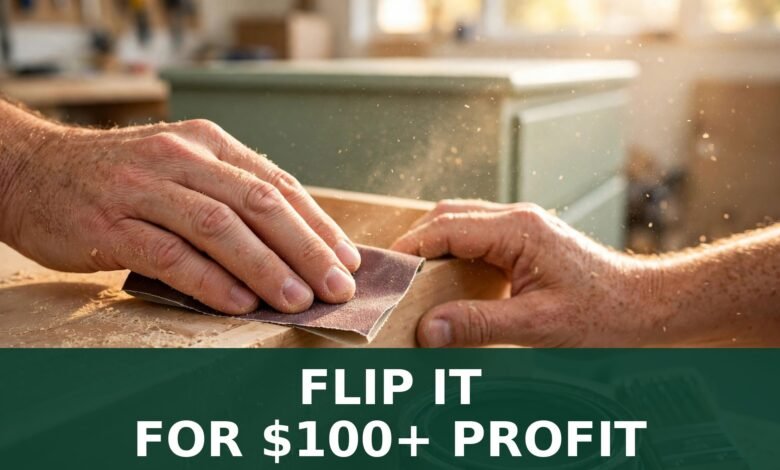
3. Sand it smooth. Start coarse, finish fine, until the surface feels smooth. Beginners rush this step; it decides whether the paint sticks.
4. Prime it. One even coat stops old stains bleeding through. Let it dry completely.
5. Paint or stain it. Two thin coats beat one thick coat every time. Stick to colors buyers want: soft white, warm greige, sage green, or classic navy.
6. Seal it. A clear top coat protects the finish from coffee rings and scratches.
7. Install new hardware. Fresh knobs cost $15 to $30 for a whole dresser and change the look most.
That’s it — no spray booth, no power tools beyond a basic sander.
Step 5: The Profit Ladder — Which Pieces Pay Best
Not every piece is worth the same effort. Solid-wood dressers: buy $30 to $80, sell $175 to $450, profit $100 to $350. Mid-century modern (teak, walnut, tapered legs): $150 to $800 profit per piece — the highest ceiling, but pricier to buy and pickier buyers. Dining tables (6+ seats): buy $30 to $100, sell $250 to $600, profit $150 to $400. Accent chairs: $75 to $250 profit — skip reupholstery at first. Side tables and nightstands: buy $10 to $40, sell $60 to $150, profit $30 to $90 — great practice, modest money.
Step 6: Listing Photos That Sell Furniture (and Where to Sell It)
Photos sell furniture. Words barely matter. Take them in daylight, near a window or outside, with the piece staged simply — a small plant, a book, nothing cluttered. Photograph every angle, including the flaw you fixed — buyers trust sellers who show it.
Write the listing like you’re texting a friend: measurements first (buyers always ask), wood type, paint color, what you fixed, and why you’re selling. Price near the middle of your sold listings, and say the price is firm if you mean it.
Sell where the buyers are. Facebook Marketplace is the best home for flipped furniture: local cash sales cost nothing in fees, and buyers come to you. Meet buyers in daylight in a public place, take payment first, never share your home address.
Step 7: The 14-Day First-Flip Plan
Days 1–3: check sold listings and set your target sell price. Days 4–5: find one solid-wood dresser under your buy rule. Days 6–7: buy supplies ($45 to $60) and clean the piece. Days 8–10: repair, sand, prime, paint. Days 11–12: seal, fit hardware, take daylight photos. Days 13–14: list it and answer messages the same day — fast replies sell furniture.
Borrow a truck or a friend’s SUV for the first few flips; a garage corner is enough space for one dresser at a time. Keep a note on your phone for each flip: buy price, supplies, hours, sell price, days to sell. After three flips you’ll know your real hourly rate — and whether to keep going or stop.
Mistakes That Eat Your Profit
Buying before checking sold prices is the big one — check first, buy second, every time. Second mistake: buying too much, too fast. One dresser — finish it, sell it, then buy the next one.
Third: skipping primer or seal coat to save an hour — the paint peels, the buyer leaves a bad review. Fourth: buying a piece you can’t move.
Finally, the scams: deposit demands before you’ve seen the piece, “wholesale lots” of damaged stock, gift-card payments. Real sellers let you inspect first. If flipping clicks, the same eye for value transfers — our guide to flipping items for beginners covers books, clothing, and small electronics with the same sold-listings discipline. And if you’d rather earn from a laptop than a paintbrush, the best AI tools for side hustles can turn the same weekend hours into digital income.
Frequently Asked Questions
How much money do you need to start flipping furniture?
$100 to $300 for a basic kit — cleaning supplies, sandpaper, brushes, paint, and a screwdriver — plus $30 to $80 for your first dresser. The cheapest start is $0 for the piece: curb finds and free Marketplace listings cost nothing.
What furniture sells best for beginners?
Solid-wood dressers: steady demand, easy to move with one helper, and a $100 to $350 profit range. Dining tables and mid-century modern pieces pay more but cost more and sell more slowly. Skip upholstery, particle board, and anything needing professional repair at first.
How much profit can you make on one furniture flip?
A typical dresser flip earns $100 to $350 in profit: sell price minus buy, supplies, repair, transport, and fees. One worked example: a $60 dresser plus $45 in supplies sold for $275 leaves $170 profit. Mid-century modern pieces can reach $150 to $800 profit, but cost more upfront.
Where is the best place to sell flipped furniture?
Facebook Marketplace: local cash sales have no fees, and buyers come to you. Etsy works for vintage pieces. Avoid shipping big furniture — the cost eats your profit. Meet buyers in daylight in a public place, and take payment before loading the piece.
Do you need a business license to flip furniture?
For most beginners selling a few refinished pieces, no. Once flipping becomes a regular income stream, your state or city may require a business license or resale certificate, and you’ll need to report the income. Keep records from day one and check local rules before you scale up.
The First Dresser Is the Hardest One
Start this weekend: check sold listings tonight, find one solid-wood piece under your buy rule, run the 6-cost formula before you pay. One dresser, one weekend, one honest profit number. The people earning $500 to $1,500 a month didn’t start with a workshop. They started with one dresser. That’s how to make money flipping furniture for beginners.
The same instinct works online — selling Canva templates turns design time into digital products, and house sitting pays you to look after someone else’s home between flips. Or browse the Online Earning category.
Turn Your Flipping Eye Into a Website That Earns Every Month
 🌐
Free Website
🌐 FREE Website — Turn Your Ideas Into Income
Disclosure: This article contains an affiliate link. If you purchase hosting through it, we may earn a commission at no extra cost to you.
Want to turn that website into a handsome monthly income? Make a website and start writing helpful articles on it — the same kind of honest, practical guides people actually search for, just like the flipping tips above. Google traffic can turn into monthly income over time, but it takes consistent articles, not overnight magic. Nobody can promise you a number, and we will not. What we can say is that the people who publish useful content week after week are the ones who give themselves a real chance.
Buy hosting through our link, send us your receipt via the JobyRoz contact page, and we will guide your basic business website setup for FREE. No jargon, no upsell — just a hand getting you started.
Disclosure: This section contains an affiliate link. If you buy hosting through it, we may earn a commission at no extra cost to you.
The Foreman Who Checks Every Drawer Twice
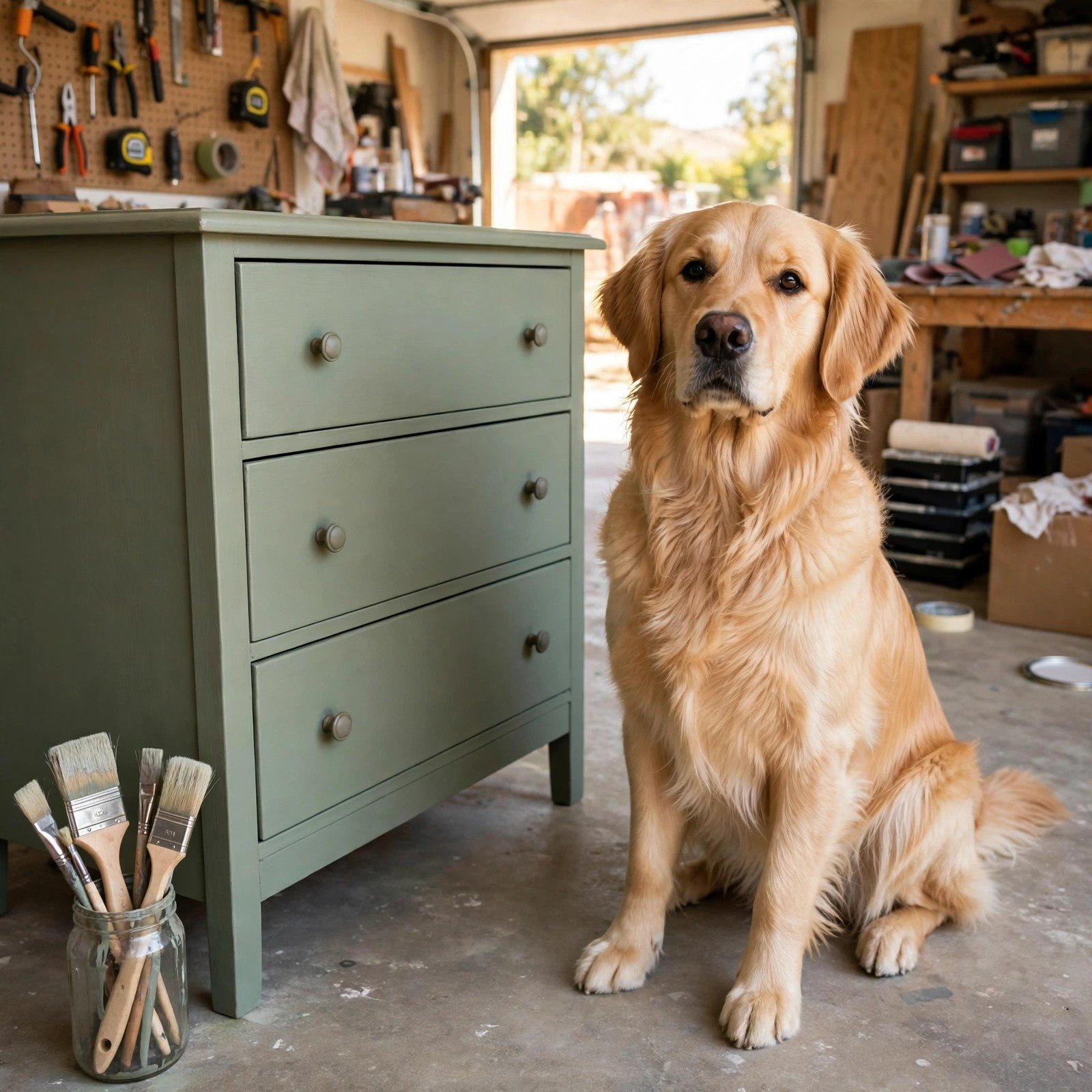
Every good flipper needs a second pair of eyes — and ours has four paws, a very serious expression, and strong opinions about which drawer slides smoothly and which one sticks. While you sand and paint, your golden retriever is already sitting beside the finished dresser, guarding the brushes and deciding whether the new knobs pass inspection. Would your flip pass his test?
 🐶
Free Pet Guides
Love dogs as much as a good bargain?
One more thing for the workshop: Clearove.com covers clean, great-tasting water at home — good water makes the coffee between flips taste better.
🧮Money Tools
Earnrove - Money Tools That Just Work