
How to Become a Pinterest Virtual Assistant for Beginners With No Experience (No Phone Calls, Work From Home 2026)

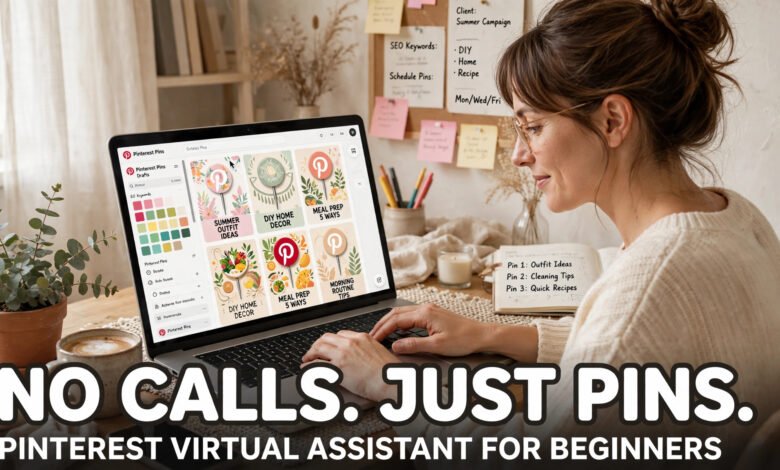
Some remote jobs sound peaceful until the first Zoom call appears on the calendar. If you like quiet work, clear tasks, and finishing something you can actually see, Pinterest virtual assistant work is worth a serious look.
Bloggers, coaches, Etsy sellers, and small brands use Pinterest for steady traffic, but most do not have time to design pins, write descriptions, and post weekly. So they hire help. A Pinterest VA creates pin images, writes short search-friendly descriptions, schedules pins, and keeps boards tidy.
You do not need a marketing degree. Pinterest is closer to a visual search engine than a social feed, and that is good news for beginners. The work rewards patience, clean design, and simple systems — not hype.
This guide walks you through the honest version: what clients actually pay for, how to build proof when you have no experience yet, a 14-day starter plan, and where to find your first client in the USA, the UK, or anywhere else.
Quick Answer
To become a Pinterest virtual assistant for beginners with no experience, pick one Pinterest-heavy niche such as food, home, travel, DIY, or weddings, learn basic Canva pin design and Pinterest keywords, build 15 to 20 sample pins for a fictional brand, package them into a simple one-page portfolio, then pitch small bloggers and shops with a clear monthly starter package. The work is mostly no-phone and can be done from home, but income is not guaranteed — your first goal is one happy client and a testimonial, not a big promise.
What a Pinterest Virtual Assistant Actually Does All Day
Forget the vague phrase “manage my Pinterest.” Real client work is a short list of repeatable tasks.
You design fresh pin images, usually tall images with a clear photo, a bold title, and the client’s branding. You write pin titles and descriptions using words their readers actually search for, like “small kitchen storage ideas” instead of “my lovely kitchen post.” You schedule pins across the week so the account stays active without daily panic. You clean up boards, remove duplicates, and check simple analytics once a week: which pins got clicks, which got saves, and what to make more of.
Some clients ask for light nearby help, like resizing a design. Keep your main offer clear anyway: “Pinterest pins, done properly every week” is easier to hire than twenty services on day one.
Most communication happens by email, Google Docs, or a project board. If phone-heavy work puts you off, say so kindly: “I work asynchronously and send a written weekly update.” The right clients love that clarity.
Why Pinterest VA Work Suits Beginners (and Introverts)
First, the skill stack is small: Canva, Pinterest itself, and a spreadsheet. You can learn the basics free, without buying a course on day one.
Second, the work is portfolio-friendly. Fifteen beautiful pins for a fictional bakery show your skill in thirty seconds in a way a data entry test never can.
Third, demand is tied to content that already exists. A food blogger with 80 old recipes sitting unseen does not need more recipes. She needs her best work in front of new people. That is a calm, logical pitch.
If you are comparing quiet options, browse our Remote Jobs guides alongside this one. Pinterest VA sits nicely next to transcription and website testing, but with one advantage: monthly packages. One-off gigs end. A monthly pin package can renew, which makes your week easier to plan. Just remember, renewals are earned with steady delivery, never promised in advance.
The Only Skills You Need to Start (Really)
Canva basics. Layout, readable fonts, and consistent colours. Two fonts per client, three colours, generous spacing. Clean beats clever.
Pinterest keyword sense. Pinterest has a search bar for a reason. Type a phrase and read the suggested searches underneath. Those suggestions are real user language. Use them in pin titles and board names.
Organised files. Name files by date and topic, keep client logos in one folder, and track what you posted. Clients notice tidy systems fast, especially if their last helper was chaotic.
Short, clear writing. Pin descriptions are two or three honest sentences. No keyword stuffing, no fake excitement. Tell the reader what they will learn or make, then stop.
Reliability. Posting on schedule sounds boring. It is also the whole product. A VA who quietly delivers every Tuesday beats a brilliant designer who vanishes for nine days.
You will pick up the rest on the job: which images get saves, and how seasons change searches (soup in autumn, salads in spring). Nobody starts knowing that.
Your 14-Day Beginner Plan (No Clients Needed)
Do not wait to “feel ready.” Build proof first, then pitch.
Days 1 to 3: Pick one niche and study it
Choose one: food, home and DIY, travel, weddings, parenting, or personal finance. Open Pinterest and search that niche for twenty minutes a day. Save pins that make you want to click. Ask why. Big title? Bright photo? A number in the headline? That short study teaches you more than a week of random tutorials.
Days 4 to 8: Build a fictional client
Invent a small brand: “Maya’s Weeknight Kitchen,” simple, friendly, weeknight dinners in 30 minutes. Design 15 to 20 pins for made-up posts like “7 cheap chicken dinners” or “Freezer meals for busy Sundays.” Use free Canva elements and respect image licences — never download random photos you do not have rights to use.
Now write a title and description for each pin using search phrases you found in the Pinterest search bar. This is your portfolio core.
Days 9 to 11: Package it like a professional
Put your best 12 pins into a simple PDF or a free one-page site. Add three short notes: the niche, the keyword idea behind each pin, and what a monthly package would include. Example: “Starter package: 12 fresh pins per month, keyword titles and descriptions, scheduled weekly, simple monthly report.” Keep pricing research-based and modest for a first client, and be honest that you are building experience. Rates vary a lot by country and client size, so check live marketplace listings rather than trusting any fixed number, including ours.
Days 12 to 14: Pitch ten real prospects
Find small bloggers or shops with good content but dusty Pinterest accounts. Send a short, specific message: mention one post you liked, show two sample pins in their style, and offer a small paid starter month. Expect silence from most people. That is normal outreach, not failure.
While you build, our AI Tools and Online Earning guides can help you work faster and plan the money side sensibly.
Where to Find Your First Pinterest VA Clients
Small blogs in your niche. The best starting point. They already have content, they understand traffic, and many earn enough to pay for help but not enough for an agency.
Etsy and Shopify sellers. Product sellers use Pinterest heavily for home, wedding, craft, and gift niches. Look for shops with lovely products and weak visuals. That gap is your pitch.
Freelance marketplaces. Upwork, Fiverr, and similar sites can bring a first testimonial. Start with a narrow gig title — “Pinterest pin design for food bloggers” beats “virtual assistant for anything.” Narrow reads as expert, even at beginner level.
Facebook groups for bloggers. Answer questions helpfully for a week before mentioning your service. Owners hire people they have seen being useful.
Local small businesses with blogs. A kitchen studio in Ohio or a wedding planner in Manchester with a tips blog is a real prospect. You do not need to live nearby — that is the point of remote work.
Avoid any “client” who asks you to pay for training, buy gift cards, or move payment off-platform in a strange way. Real clients pay you. Full stop.
Mistakes That Slow Beginners Down
The biggest mistake is offering everything. Inbox, bookkeeping, Instagram, Pinterest, podcast editing — that list makes clients nervous. One clear service, done weekly, is a calmer business.
The second mistake is copying big accounts pixel by pixel. Study them, then design in your client’s colours and voice.
Third: ignoring keywords. A pretty pin titled “Yum!!” will struggle. A plain pin with the exact phrase readers search can quietly work for months.
Fourth: waiting for perfect. Send the imperfect portfolio anyway. Clients cannot hire work they have never seen.
Finally, never promise traffic explosions or income. Pinterest growth is slow and seasonal, and honest VAs say so — the same honest standard we keep in our Personal Finance guides.
Frequently Asked Questions
Do I need experience or a certificate to become a Pinterest virtual assistant?
No. Clients care about sample work and reliability. A small fictional portfolio plus a clear weekly package will do more for you than a certificate nobody asked for.
Do I need Canva Pro to start?
No. Start with the free version and learn layout properly first. Upgrade only when a paying client makes the extra elements worth it. Keep receipts if you run this as freelance work in your country.
How much can a beginner Pinterest VA earn?
It varies by country, niche, and how many clients you can serve well, so treat any single number online with caution. Many beginners start with one small monthly package, prove themselves, then raise prices with testimonials. Never trust anyone who guarantees a set income — including from this work.
Is Pinterest VA work really no-phone?
Mostly, yes. Many small clients work happily through email and shared docs with a written weekly update. Some larger clients like an occasional call, so just be upfront about how you prefer to work before you agree.
How long until I get my first client?
There is no honest fixed timeline. The 14-day plan gives you something real to show, and ten thoughtful pitches give you a fair first test. If nobody replies, improve the samples and pitch ten more. That loop is the job at the start.
Conclusion
Becoming a Pinterest virtual assistant is one of the calmer ways to start remote work in 2026. The tools are simple, the portfolio is visual, and the clients — busy bloggers and small sellers — genuinely need the help.
Keep your start small and honest. One niche, fifteen sample pins, one clear package, ten kind pitches. Then do the unglamorous thing that actually builds this career: deliver on schedule, report simply, and let one happy client become your proof for the next.
Pick your niche tonight. Your fictional client is waiting, and she has twelve pins due by Tuesday.