
How to Make Money Transcribing Audio Online for Beginners in the UK (No Experience Needed)

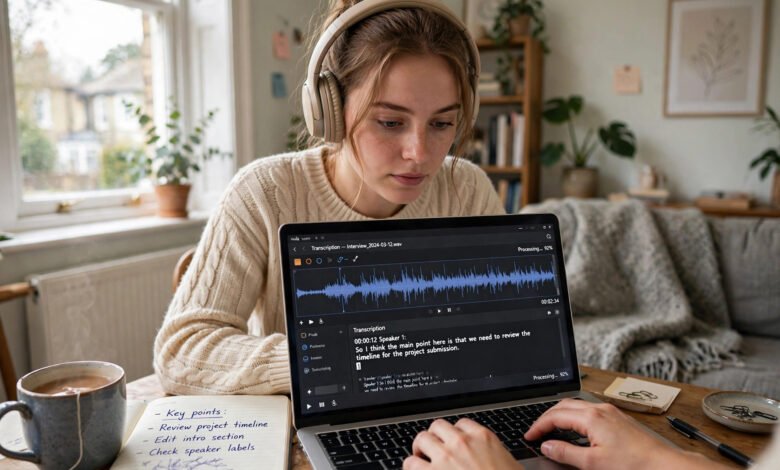
If you can listen carefully and type what you hear, you already understand transcription. Someone records an interview, a meeting, or a podcast. They need it as clean text. You turn the audio into words and get paid for it.
It is not glamorous. You will rewind the same sentence three times because two people talked over each other. But for UK beginners who want flexible work from home — around studies, a day job, or family life — it is one of the most straightforward ways to earn your first money online. No stock, no camera, no audience needed.
This guide covers what the job involves, what it pays without hype, where to find work, and a seven-day plan for your first paid files.
Quick Answer
To make money transcribing audio online as a UK beginner, practise with free audio for a few days to build accuracy, join two beginner-friendly platforms, pass their short test files carefully, and start with short, clear recordings. You only need a laptop, decent headphones, and a quiet corner. Most platforms pay per audio minute, not per hour you work, so accuracy first and speed second is how you protect your earnings. Start small, collect good ratings, then apply to better-paying UK agencies and direct clients. If you are comparing options, our Online Earning guides cover other beginner routes side by side.
What Does a Transcriber Actually Do?
You listen in short bursts, type what is said, add speaker labels when more than one person is talking, and tidy filler words like “umm” only if the client asks for a clean read. Some clients want every word exactly as spoken. That is verbatim transcription, and it takes longer.
Most beginner work is general transcription: interviews, business calls, university research, YouTube captions, and podcast show notes. You are not expected to handle medical or legal language on day one.
A 12-minute interview does not mean 12 minutes of work. When you are new, one minute of audio can take four to six minutes to transcribe. You pause, rewind, and check names. After a few weeks, many people get closer to three minutes of work per audio minute on clear recordings.
Do You Need Experience or Fast Typing?
No formal qualification is required, and most beginner platforms will not ask for a certificate. Their entry test checks three things: can you hear accurately, can you spell and punctuate in clear English, and can you follow their style guide. For UK work, that means British spelling — organise, behaviour, centre.
Typing speed helps, but accuracy matters more. Plenty of people type quickly and still produce messy transcripts because they guess instead of rewinding. If you type at a steady pace and check your work, you can start. Speed builds with practice.
If you dislike wearing headphones for focused stretches, transcription will feel tiring. Another route, like making money proofreading online for beginners in the UK, might suit you better.
What You Need to Start
You can begin with a laptop or desktop, a reliable internet connection, and headphones you can wear for an hour. Earbuds will do at first, but over-ear headphones help you catch quiet words.
Most platforms have a built-in player, so you do not need to buy software on day one. A foot pedal is popular with full-time transcribers but not essential for your first files.
Two free habits help most: learn the shortcuts for play, pause, and rewind, and keep a personal list of words you keep mishearing. Checking that list before you submit saves repeated deductions.
Where Beginners Actually Find Work
Work comes from two places: large platforms that send you files, and clients you build a relationship with directly.
Beginner-friendly platforms
These are the easiest first step because clients are already there. You create a free account, pass a short test, and choose from available files. Short files are ideal when learning — you finish, get feedback, and improve quickly.
Pay is usually per audio minute and varies by difficulty and accuracy grade. Clear files pay less but finish faster. As a beginner, choose clarity over headline rate.
Read each platform’s style guide before your test. Most rejections happen because people ignored simple instructions on speaker labels or inaudible sections.
UK agencies and direct clients
With a few dozen completed files and good ratings, UK agencies become an option. They work with universities and media companies and usually pay better, but expect consistency and deadlines you meet.
Direct clients are the next step: podcasters, YouTubers, coaches, and research teams who need regular transcripts. One weekly client can beat a scatter of one-off files. See our Remote Jobs section for how this fits with other flexible work.
Safety note: a legitimate job will never ask you to pay for training or share bank details before a verified account. If a listing promises very high pay for simple work and pushes you to a private messaging app, leave it.
How Much Does Transcription Pay in the UK?
Adverts often quote the top rate as if it is the starting rate, so keep a clear head here.
Beginners are paid per audio minute. When you are new, your effective hourly earnings will be low for the first couple of weeks while you learn the platform. As speed and accuracy improve, the same rate produces a better hourly return.
What moves pay up fastest is a high accuracy score that unlocks better files, handling slightly harder audio well, and reliability. Platforms promote people who submit clean work on time.
Specialist legal and medical work pays more later but needs extra training. Treat your first month as paid training and track how long each file really took you. Once payments land, our guide to building an emergency fund on a low income is a practical next read.
Your 7-Day Starter Plan
Day 1 – Practise. Transcribe five minutes of a clear podcast, then compare with its published transcript.
Day 2 – Learn the basics. Practise speaker labels and how to mark a word you cannot hear instead of guessing.
Day 3 – Set up. Headphones on, notifications off, and a document for your spelling list. Do two more practice files and time yourself.
Day 4 – Choose two platforms. Read both style guides fully, then take the easier test first. Careful beats fast.
Day 5 – Take your test properly. Quiet time, check every name, and read the transcript once through before submitting.
Day 6 – Pick short, clear files only. Your goal is good ratings, not volume. Note how long each file took.
Day 7 – Review. Check feedback and set a realistic weekly slot, like an hour on weekday evenings. If you study too, our guide to part-time remote jobs for students shows how to fit this around lectures.
Mistakes That Make Beginners Quit
Guessing instead of rewinding. Your brain invents a word that fits, and it is often wrong. Rewind twice, and if you still cannot hear it, mark it as the guide instructs.
Chasing hard files too soon. A higher rate on noisy audio can pay less per hour than a clear interview. Protect your accuracy score first.
Ignoring the style guide. Each platform differs slightly. Following the guide in front of you is a big part of the job.
Submitting without a final read. One fresh read catches missing words and names spelled two ways. That pass is the work, not optional polish.
Expecting instant income. People who do well show up for a few focused hours a week rather than expecting the first weekend to replace a wage.
How to Get Faster Without Burning Out
Learn your player’s shortcuts until they are automatic, keep your glossary open, and work in 25 to 40 minute blocks with proper breaks.
Some transcribers draft with speech-to-text and then correct it. That can help on clear audio, but the correction must be thorough because automated drafts get names and accents wrong. Our AI Tools guides and our roundup of free AI tools for small businesses in the UK explain where AI helps and where a human check is essential.
Keep volume low, stand up between files, and protect your posture. It is what lets people keep this up month after month.
Frequently Asked Questions
Can I really start transcribing online with no experience in the UK?
Yes. General platforms regularly take on beginners who pass their accuracy and style test. You do not need a degree or a previous job. You need strong everyday English, patience with rewinding, and the discipline to follow a style guide exactly.
How much can a beginner transcriber earn in the UK?
It varies a lot, and nobody honest can guarantee a figure. Beginners are paid per audio minute, and your real hourly earnings depend on how long each file takes you. Earnings are modest while learning and improve as speed and accuracy rise. Track your time to see your true rate.
What equipment do I need to start transcribing?
Very little. A laptop or desktop, reliable internet, and comfortable headphones cover almost everything for your first files. Most platforms provide a built-in player. A foot pedal can help later but is not required for your first approval.
How long does it take to transcribe one hour of audio?
For a beginner on clear audio, one hour of recording often takes four to six hours at first. With practice, many people reach three to four hours. Difficult audio takes longer, which is why beginners should choose clear files while building speed.
Is transcription different from proofreading or data entry?
Yes. Transcription turns audio into text. Proofreading checks finished writing for spelling and grammar. Data entry moves information into spreadsheets or systems. Some people build a few small income streams this way — an approach we explore in our Personal Finance guides.
Conclusion
Transcription will not make anyone rich overnight, and any advert telling you otherwise is not being straight with you. What it does offer is a clear, learnable skill: listen carefully, type accurately, follow the guide, and submit on time. For beginners in the UK who want work that fits around real life, that is a solid place to start.
Begin with practice, choose two platforms, protect your accuracy score like it matters — because it does — and give yourself a few weeks to get genuinely faster. One short file finished well is worth more than a long file rushed and returned for corrections.
When you are ready to compare routes, browse our latest guides across Online Earning, Remote Jobs, AI Tools, and Personal Finance. Pick the one quiet skill you will still enjoy in three months’ time, and start with your first five careful minutes today.