How to Become a Bus Driver in the UK in 2026: The Who-Pays-First System That Gets You Earning in 6 Weeks

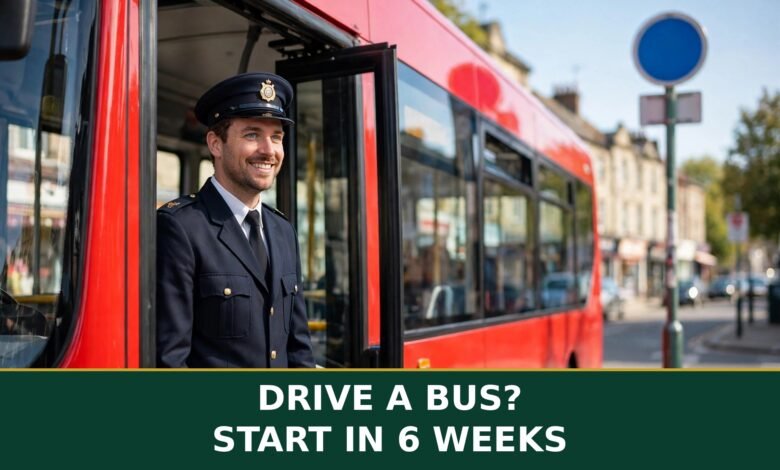
If you can already drive a car, you are closer to driving a bus than you think. No degree, no previous bus experience — just a licence ladder and one decision most people get backwards: who pays for the training. This is the complete guide to how to become a bus driver uk in 2026, with real pay figures, real costs and a week-by-week plan.
Quick answer: You need to be 18 or over, hold a full UK car licence, pass a D4 medical, get a provisional Category D licence, pass the theory and practical tests, and complete your Driver CPC. Most new drivers qualify in four to eight weeks. Pick your funding route first: an operator trainee scheme, a Bus or Coach Driver apprenticeship, or self-funded training at roughly £1,829 to £3,500. Starter pay runs £25,000 to £37,000 a year; London drivers earn £39,000 to £44,000.
The short answer: what it actually takes
The route is simple: pass a medical, add a provisional bus entitlement, pass a theory test and a practical test, and finish the Driver CPC. Most learners qualify in four to eight weeks.
You do not need previous bus or HGV experience — providers take learners straight from a car licence. And operators are hiring: the Confederation of Passenger Transport reported more than 4,000 bus and coach vacancies in late 2025. Like the route into teaching assistant work, this is a no-degree career change that takes weeks, not months.
The Who-Pays-First System: pick your funding route before anything else
Every guide lists the same licence steps. Almost none start with the question that decides whether this costs you £0 or £3,500: who pays for your training? Pick your route first — each one changes what you do next.
Route 1: Operator trainee scheme — the employer pays
This is the route most new drivers take. Big operators — Arriva, Stagecoach, First Bus, Go-Ahead and National Express — recruit trainees, pay for the medical, training and tests, and pay you a trainee wage while you learn. You usually agree to stay for a set period after qualifying. Search your local operator’s careers page for “trainee bus driver” or “PCV trainee” and apply at your nearest depot; if it has no vacancies this month, check again in a few weeks.
Route 2: Bus or Coach Driver apprenticeship — earn while you qualify
There is a recognised Bus or Coach Driver apprenticeship: the job plus training, with at least 20% of your hours spent on off-the-job learning. You are an employee from day one, with a wage, holiday pay and full employment rights. From 1 April 2026 the apprentice rate is £8 an hour, and many operators pay above that. Find vacancies through the official Find an Apprenticeship service and operator careers pages — and if you already work for an operator in another role, ask whether they will put you through it.
Route 3: Self-funded training — fastest, but you carry the cost
If you want to choose your employer freely or aim for coach and tour work, paying yourself can be the right call. A typical Category D package runs from about £1,829 all-in, including VAT and both DVSA test fees, up to £2,500 to £3,500 elsewhere. Budget £50 to £120 extra for the D4 medical, and roughly £300 to £500 later for CPC periodic training. Before you pay, get an itemised written quote — hours, vehicle hire, test fees, resit charges. A school that will not put it in writing is one to walk away from.
The 3-question picker: can you wait a few weeks for a trainee vacancy? If yes, take Route 1. Want a formal qualification, or just the licence fast? Qualification points to Route 2, speed to Route 3. Could you afford £2,000 to £3,500 if a test needed retaking? If that makes you wince, do not self-fund.
How to become a bus driver UK: the licence ladder, in order
Step 1: hold a full UK car licence and be at least 18 — there is no upper age limit. Step 2: pass the D4 medical (order forms D2 and D4 from the DVLA). Step 3: apply for your provisional Category D licence and wait for it before booking training. Step 4: pass the theory tests — 100 multiple-choice questions, hazard perception and the CPC case studies test (Module 2). Step 5: five days of one-to-one practical training in the cab. Step 6: pass the practical tests — off-road exercises (£40) and the on-road driving test (£115). Step 7: complete the Driver CPC — Module 2 (already passed) and Module 4, a practical demonstration test. Once you hold your CPC card you can drive professionally; keep it with 35 hours of periodic training every five years.
How much do bus drivers earn in the UK?
Pay is hourly, so look at the rate and the hours, not the yearly figure in an advert. The National Careers Service gives £25,000 for a new driver to £37,000 for an experienced one; the ONS median is around £36,250 a year. Indeed’s England average (2,900 salaries, November 2026) is £16.33 an hour, most drivers between £12.71 and £21.30.
Run the maths yourself: £16.33 an hour on a 40-hour week is about £653 a week, roughly £34,000 a year before overtime. The Department for Transport’s median is £639 a week on 40 hours. A £31,000 salary is roughly £2,153 a month after tax and National Insurance. The same hourly maths applies to delivery driving — multiply the rate by the hours you would actually work.
London pays more: experienced London drivers earn £39,000 to £44,000, roughly a quarter to 40% above the national average, because Transport for London sets a minimum rate. Overtime pushes pay higher, but none of it is guaranteed — treat the basic rate as your real pay. After year one the ladder opens up: coach and tour driving, school contracts, airport shuttles, private hire — roles quoted at £40,000 and above — or controller, trainer and depot management.
The 6-week timeline
Week 1: order forms D2 and D4, book the medical, apply for your provisional licence — and for two or three trainee schemes. Week 2: study for theory, twenty minutes a day. Week 3: sit the theory and Module 2 tests, then book practical training. Week 4: five days of practical training, one-to-one in the cab. Week 5: practical tests, then Module 4. Week 6: licence and CPC card in hand, start your induction. Six weeks is realistic when nothing slips; allow eight to ten if test dates are scarce. Operators hire hardest before Christmas — Christmas temp work can bridge the gap.
The D4 medical: the check that catches people out
The D4 medical is the one step you cannot revise for — and it quietly ends more applications than any failed test. A doctor checks your eyesight, blood pressure, heart, diabetes control and general fitness; the DVLA sets the standards, not the school or the operator. Get it done early, before you pay for training. Bring glasses or contact lenses and a medication list. If you have diabetes, sleep apnoea or a heart issue, check the GOV.UK medical standards or ask the doctor — many conditions are fine once controlled and declared.
What the job is really like
Most bus driving is shift work: early starts around 4 or 5 in the morning, split shifts, and weekend working on a rota. When your shift ends, the work ends. The job is steady, the pension and holiday pay are proper, and many operators give you free travel on their network. If you need every evening and weekend free, this is not the job for you; if you can live with a rota, it is one of the most secure ways to earn a steady wage without a degree. And passengers remember the driver who waits ten seconds for someone running for the bus.
Your 7-day start plan
Day 1: check you are 18 or over with a full car licence, then order forms D2 and D4 from the DVLA. Day 2: search “trainee bus driver” plus your town and apply for every trainee vacancy nearby. Day 3: book your D4 medical and check the Find an Apprenticeship service. Day 4: if you are going self-funded, get written quotes from two training schools. Day 5: start theory revision — twenty minutes a day. Day 6: work out your real numbers — the hourly rate at your nearest depot, times the hours you would work, minus tax. Day 7: send your provisional application and set a reminder to chase it in three weeks. School leavers can pair this with our 30-day first-job system.
Frequently asked questions
Do you need experience to become a bus driver?
No. You need a full UK car licence, to be 18 or over, and to pass the medical, theory and practical tests. Operators and training schools take learners straight from a car licence.
How long does it take to become a bus driver in the UK?
Most drivers qualify in four to eight weeks once the provisional licence arrives, with about five days of practical training in the middle. Allow eight to ten weeks if test dates are scarce, and longer if you are waiting for a trainee scheme place.
What licence do you need to drive a bus in the UK?
You need a Category D (PCV) licence, which covers buses and coaches with more than eight passenger seats. A Category D1 licence covers minibuses with 9 to 16 seats. On top of the licence you need a Driver CPC card, kept valid with 35 hours of periodic training every five years.
How much does bus driver training cost in the UK?
Self-funded Category D training typically costs £1,829 to £3,500, plus £50 to £120 for the D4 medical. Operator trainee schemes and apprenticeships cost you nothing — the employer pays.
Can you become a bus driver at 18?
Yes. Eighteen is the minimum age, and you need a full car licence first. For 18- to 20-year-olds, an employer-funded trainee scheme or apprenticeship is usually the best value.
Conclusion
Becoming a bus driver in the UK is one of the shortest routes from “I need a steadier income” to a qualified, in-demand job — measured in weeks, not years. The trick is the order: decide who pays first, then work the ladder. Check trainee schemes before you spend anything, get the D4 medical done early, and run the pay maths on the hourly rate, not the headline salary. Do those three things and the rest is turning up and driving. If driving ever takes you further afield, read our guide to getting a job abroad, or browse more roles in our Remote Jobs section.
Starting Something of Your Own? Get Your FREE Website
Learning to drive a bus gives you a steady wage — but plenty of drivers also build a small side income around what they know, from a local driving-tips blog to a simple site for a family business. And here is the thing most people miss: every business needs a website today, whether it is a one-van cleaning firm, a cake stall, or a driving school. Setting one up is far simpler than it sounds — just buy hosting through our link, tell the built-in AI about your business, and the AI builds the website for you. No coding, no designer, no jargon.
 🌐
Free Website
🌐 FREE Website — Turn Your Ideas Into Income
Disclosure: This article contains an affiliate link. If you purchase hosting through it, we may earn a commission at no extra cost to you.
If you want to earn a handsome amount monthly, a website plus helpful articles is one of the most reliable ways to start: Google traffic can turn into monthly income over time. It takes consistent articles, not overnight magic — there are no guarantees, but the drivers who write steadily about what they know are the ones who build something real. Buy hosting through our link, send us your receipt through the JobyRoz contact page, and we will guide your basic business website setup for FREE.
Disclosure: This section contains an affiliate link. If you buy hosting through it, we may earn a commission at no extra cost to you.

The Only Passenger Who Never Needs a Ticket
 🐶
Free Pet Guides
🐶 Love Dogs Too?
Would your dog wait at the bus stop with you every morning?
Visit Earnrove.com for money calculators and saving tools that help you plan around a new driver’s wage, and visit Clearove.com for clean-water guides that keep your household healthy on shift work.
🧮Money Tools
Earnrove - Money Tools That Just Work