How to Become a Security Guard in the UK in 2026: The Licence-First System That Gets You Earning in 6 Weeks

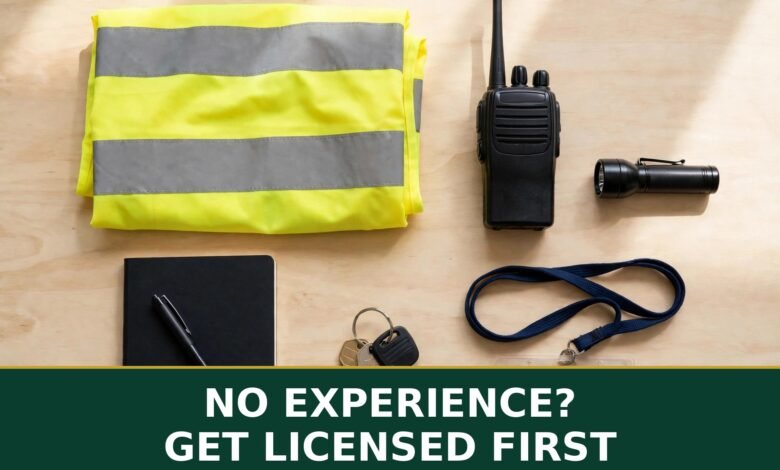
Security guarding is one of the few jobs in Britain you can walk into with no degree, no experience and no months of training. But most people walk through the door in the wrong order: they book the first cheap course they find, pay for it, and only then discover they picked the wrong licence — sometimes a second course, sometimes a second licence fee. This guide answers how to become a security guard UK, in the right order — licensed and earning in around six weeks for roughly £414 to £600 all in.
The quick answer
To become a security guard in the UK in 2026 you need to be 18 or over, hold a valid first aid certificate, pass a four- or six-day SIA training course, and apply for an SIA licence (£204, three years). The process takes about five to six weeks, and the average guard earns around £13.50 an hour. The decision that matters most is which licence you apply for — choose it before you book training: the Door Supervisor licence covers everything the Security Guard licence does, plus licensed premises.
Step 1 — Pick your licence first (before you spend a penny)
Two front-line licences matter for a new starter, and they are not equal. A Security Guard licence lets you guard shops, offices, warehouses, construction sites and gatehouses. A Door Supervisor licence lets you do all of that, plus work in pubs, bars, clubs, festivals and any venue that sells alcohol.
The Security Guard course is shorter — four days against six — and a little cheaper, but it locks you out of licensed premises. Want a Friday night door shift or an event shift at a venue that serves alcohol? The Security Guard licence cannot get you in. You would have to train again and pay the £204 fee again.
So the rule is simple: take the Door Supervisor route unless you are certain you only ever want static guarding work — a quiet warehouse, an office reception, a construction gatehouse — and never want the door or event option. For most people it is the stronger first licence: more jobs from day one, slightly higher pay (£14.16 an hour against £13.51, Indeed, March 2026), and employers prefer it because they can deploy you anywhere.
The one honest reason to take the Security Guard route instead is physical intervention: Door Supervisor training includes a practical, assessed physical intervention unit, while Security Guard training covers the same ideas as knowledge only. If hands-on training puts you off, the Security Guard route is the right call — just know which jobs it closes off.
What the licence actually costs (both routes, all in)
| Item | Security Guard route | Door Supervisor route |
|---|---|---|
| First aid (EFAW) course | £50–£100 | £50–£100 |
| Licence-linked training | £150–£250 (4 days) | £250–£350 (6 days) |
| SIA licence application fee | £204 | £204 |
| Total, start to finish | About £414–£554 | About £504–£654 |
Prices vary by provider and city. Two traps sit inside that table. The first is the fee itself: £204 from 1 April 2026, because a temporary £20 rebate ended on 31 March. Plenty of guides still show the old £184 figure — if a page quotes £184, double-check the rest. The fee is non-refundable, so do not apply until your training is passed.
The second trap is the second licence: apply for it on the same day, on the same form, and it costs £102 instead of £204 — a 50% discount in place since 1 June 2026. Apply on a different day and you pay full price.
Step 2 — First aid first (yes, before the course)
You need a valid Emergency First Aid at Work certificate before licence-linked training, not after. The SIA has required it since 2021, and it must have at least 12 months left when your training begins. A one-day EFAW course costs £50 to £100, often bundled with the licence course — but check it is a proper EFAW qualification, not a short online certificate.
Step 3 — Book training without getting ripped off
Training providers are not “SIA approved” — that phrase appears on a lot of adverts and means nothing. The SIA sets the qualification; awarding organisations such as Highfield, Pearson, NCFE, City & Guilds, SFJ Awards and QNUK approve the providers. If a provider leans on “SIA approved”, treat it as a warning sign.
Three checks before you pay. First, confirm the exact qualification: the Level 2 Award for Working as a Security Officer in the Private Security Industry (England, Wales and Northern Ireland). Second, ask who the awarding organisation is — and beware one trap: the SIA no longer accepts qualifications granted by BIIAB on or after 11 August 2026, so a cheap BIIAB course after that date will not get you a licence. Third, get the full price in writing — first aid, exams, retakes and VAT included — and compare two or three local providers. And ignore any provider promising a guaranteed job: no training company can guarantee employment.
Step 4 — Apply for the licence
Once you have passed the course, apply online through your SIA account. You will need your training certificate, photo ID, proof of address and five years of address history. The SIA runs identity and criminal record checks; if you have lived outside the UK for long stretches, you may be asked for overseas criminal record evidence.
Plan on around 25 working days for the licence to arrive — five to six weeks from a standing start, all told. Do not book shifts that depend on the licence until it is in your hand, and do not pay the £204 fee until your training certificate is ready.
Step 5 — Get hired (where the jobs actually are)
With the licence in hand, the jobs come from three places. Big security companies — holding contracts for retail parks, hospitals, construction sites and offices — recruit constantly and are the easiest first employer. Agencies fill short-notice shifts and are the fastest way to start earning, and direct employers — a shopping centre, a university, a hotel — sometimes hire their own guards.
Expect screening. Reputable employers screen new guards to BS 7858, the British Standard covering your employment and address history. Have your last five years of addresses and jobs written down before you apply.
Hired directly “in-house” by the organisation whose premises you guard, you usually do not need an SIA licence for ordinary guarding work. Contracted work normally does need one, and door supervision at licensed premises always needs the right licence. For a new starter the licence is still worth having: most jobs are contracted.
What you will actually earn
Let us be honest about the money, because the averages hide a wide range. Indeed data from March 2026 puts the average UK security guard at £13.51 an hour, door supervisors a little higher at £14.16; a November 2026 update shows £14.14 from 1,200 salaries. The National Careers Service range is broader: £20,000 a year for starters, up to £35,000 experienced. London pays more — typically £14 to £18 an hour.
From 1 April 2026 the National Living Wage is £12.71 an hour for workers aged 21 and over, and no SIA-licensed role can legally pay below it. The average guard earns only about 80p above that floor, so the shift pattern matters as much as the rate — nights, weekends and bank holidays often pay more. A full-time 40-hour week at £13.51 an hour is roughly £28,000.
Now the break-even maths. Take the Security Guard route at the low end, £414 all in: at £13.51 an hour, you earn that back in roughly 31 hours, or about four shifts. Take the Door Supervisor route at the high end, £654, and at £14.16 an hour you break even in about 46 hours, or six shifts. Either way, the licence pays for itself inside your first two weeks of work.
The 14-day sprint
Day 1: check you are 18 or over, have the right to work, and can list five years of addresses. Day 2: pick your licence — Door Supervisor for most people — and book first aid. Days 3 to 4: complete first aid and book training with a checked provider. Days 5 to 10: complete the course and pass the exams. Day 11: apply for the SIA licence online and pay the £204 fee. Days 12 to 14: while the SIA processes your application, write your CV, gather your five-year history, and apply to three local companies and two agencies. When the licence lands, five to six weeks from day one, have interviews lined up — not a blank calendar.
Frequently asked questions
Do I need experience to become a security guard in the UK?
No. The licence, first aid certificate and training course are the entry requirements — employers train you on the specific site once hired.
How much does it cost to become a security guard in the UK?
About £414 to £554 all in for the Security Guard route, or £504 to £654 for the Door Supervisor route, including first aid, training and the £204 fee. The licence lasts three years.
How long does it take to get an SIA licence?
About five to six weeks: a day for first aid, four to six days of training, then around 25 working days for SIA processing. Apply for jobs while you wait, but do not start licensable work until the licence arrives.
Is a Door Supervisor licence better than a Security Guard licence?
For most new starters, yes. It covers everything the Security Guard licence does, plus licensed premises, so it opens more jobs and pays slightly more. Choose the Security Guard licence only to avoid the practical physical intervention unit, or if you only want static guarding work.
Can I become a security guard with a criminal record?
Possibly. The SIA considers the offence, how long ago it happened, and whether it relates to the work. Declare everything honestly — a lie found later is far worse than a disclosed conviction.
Conclusion
Becoming a security guard in the UK is one of the quickest routes into steady, licensed work — but only if you choose the licence before you spend the money. Pick the Door Supervisor route unless you have a clear reason not to, budget £414 to £654 all in, get first aid done first, and check your provider before you pay. In that order, you can be licensed and earning in around six weeks, the licence paying for itself inside your first fortnight. If guarding is not for you, the same thinking works for delivery driving, bus driving, teaching assistant work and NHS roles with no experience — with more routes in the Remote Jobs section.
Want a Free Website for Your Security Business?
 🌐
Free Website
🌐 FREE Website — Turn Your Ideas Into Income
Disclosure: This article contains an affiliate link. If you purchase hosting through it, we may earn a commission at no extra cost to you.
If you want to earn a handsome amount monthly, make a website and start writing helpful articles on it. Google traffic can turn into monthly income over time — but it takes consistent articles, not overnight magic. Nobody can promise you instant earnings, and this is not a guarantee of income.
Buy hosting through our link, send us your receipt through the JobyRoz contact page, and we will guide your basic business website setup for FREE.
Disclosure: This article contains an affiliate link. If you buy hosting through it, we may earn a commission at no extra cost to you.
The Only Guard Dog Who Works Every Shift for Treats
Just finished a 12-hour shift on your feet? Your dog has been on duty too — guarding the sofa, the front door and your slippers, all for the price of a biscuit. If your four-legged guard deserves better kit, Furveko.com has honest guides on the beds, bowls and gear that actually last.
 🐶
Free Pet Guides
Two more free tools while you are here: Earnrove has free money calculators — including a take-home pay calculator to check what your guard shifts are really worth — and Clearove explains how to keep your tap water clean and safe at home.
🧮Money Tools
Earnrove - Free Money Calculators