
How to Build Credit With No Credit History in 2026: The One-Account-First System That Gets You a Score in 6 Months

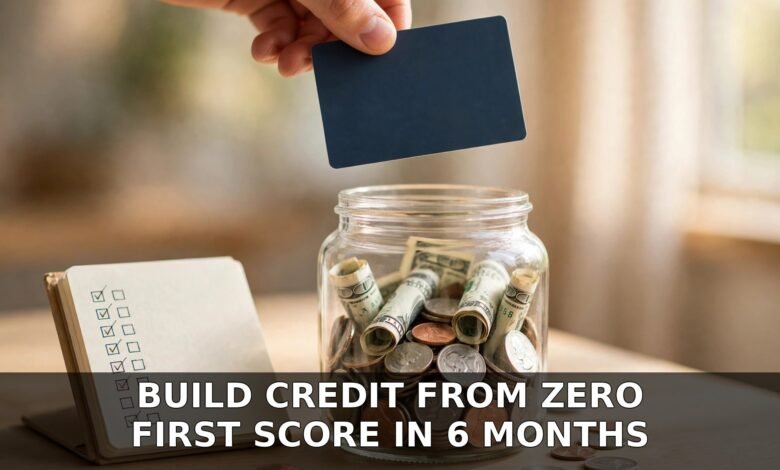
You need a credit score to rent an apartment, get a fair car insurance rate, or sign up for some phone plans — but to get a score you need credit history, and to get credit history somebody has to give you credit first. It is the most frustrating catch-22 in American personal finance.
You are not stuck: about 7 million U.S. adults had no credit record as of December 2020, per the Consumer Financial Protection Bureau’s June 2025 update, and millions more have files too thin to score. The fix is specific: pick one starter account and set it up right in week one.
Quick Answer: How to Build Credit With No Credit History
Open one account that reports to the three bureaus — a secured card is the most common choice — put one small bill on it, turn on autopay for the full balance, and keep spending under 10% of the limit. A VantageScore can appear after about one month; a FICO Score, the one most lenders use, needs an account open at least six months. That is the whole system. The rest of this guide covers picking the right first account and the three mistakes that reset the clock.
What “No Credit History” Actually Means
Having no credit history does not mean you have a credit score of zero — there is no such thing. FICO Scores run from 300 to 850, and with no file at the three bureaus, there is nothing to score. You are what the industry calls “credit invisible.”
That is different from bad credit, where lenders have evidence you missed payments. With no credit they have no evidence at all, so they default to caution. A landlord cannot see whether you pay on time, so most say no, or yes only on expensive terms. The fix is to give them something to see: one account, reporting every month and paid on time. One account is enough — and safer, because every account is another payment to miss.
The Two Clocks You Need to Know
Two timelines decide when your first score appears. Clock one: VantageScore, about one month. The model built by the three bureaus together can generate a score after roughly one month.
Clock two: FICO, six months. A FICO Score needs an account open at least six months, plus one account reported in the past six months — and it is the score most lenders pull. So the honest timeline is: a VantageScore in month one, your first FICO Score around month six.
Payment history is about 35% of a FICO Score — the single biggest slice. That is why this whole system is built around one habit: never miss a payment.
Step 1: Pick Your ONE First Account
Four ways in — pick the one that fits and ignore the rest.
Option A: A secured credit card — best for most people. You put down a refundable deposit, typically $200 to $500, and that deposit becomes your credit limit — $300 in, $300 limit. The issuer reports your payments to all three bureaus, and you get the deposit back when you upgrade or close the account in good standing. Before you apply, confirm it reports to all three bureaus and charges no annual fee, or only a small one — the deposit removes the lender’s risk, so this is the closest thing to a guaranteed first step.
Option B: A credit-builder loan — best if you do not want a card. This loan works backwards: the lender holds $300 to $1,000 in a locked savings account while you make monthly payments of about $25 to $50 over 6 to 24 months. Each payment is reported, and you get the money back at the end. The small interest is the price of building history without a card; credit unions are often the cheapest source.
Option C: Become an authorized user — best if it costs you nothing. If a parent or trusted family member has a card with a long, clean history, they can add you as an authorized user and their history can appear on your report — free. Two warnings: it only helps if the issuer reports authorized-user accounts and that person actually pays on time. Their late payment becomes your problem too.
Option D: A student card — best if you are in college. Student cards are designed for people with little or no credit history, and several major issuers offer them with no deposit and no annual fee. Same rules: one card, one small bill, autopay on.
If none of those four fits, rent and bill reporting can help: Experian Boost adds utility and streaming payments to your Experian report, and some services add your rent. Treat these as supporting tools, not a first account — they do not open a credit file by themselves.
Step 2: Set It Up Right in Week One
Turn on autopay for the full statement balance. Not the minimum — the full statement balance, every month, automatically. Payment history is 35% of your score, and autopay makes “on time” automatic. If irregular income makes that scary, set autopay for the minimum as a safety net and pay the rest manually.
Put one small recurring bill on it. A streaming subscription, your phone bill, one tank of gas a month — pick one predictable charge and nothing else. The card is now a reporting tool, not a spending tool.
Keep what you spend under 10% of the limit. The bureaus look at how much of your limit you use, and lower is better. On a $300 secured card, 10% is $30 — one $15 subscription is perfect. If a bigger charge lands on the card, pay it down before the statement closes. Under 30% is the usual advice and it is fine — but under 10% is stronger when you are starting from zero.
Your Month-by-Month Timeline to a First Score
Month 1: Your first account is open and reporting, and a VantageScore may appear. Check AnnualCreditReport.com — free weekly reports from all three bureaus — to confirm the account is showing up. If it is not there after a full billing cycle, call the issuer.
Months 2–3: Two or three on-time payments are on your file. Nothing dramatic happens — that is normal, and this is when most people get impatient and apply for a second card. Do not. One account, one bill, autopay on.
Month 6: Your first FICO Score appears — the milestone that matters, because it is the score most lenders use. It will not be a great score: six months on one account is a thin file. A thin file with perfect payments is a foundation; a thin file with a missed payment is a hole you will spend a year climbing out of.
Months 7–12: Now you can take a second step: if your issuer offers graduation to an unsecured card, take it and get your deposit back. If you want a second card, apply for one — just one — and keep the same routine. By year one you have twelve on-time payments and a real credit history.
The 3 Mistakes That Reset the Clock
Mistake 1: Applying for three cards at once. Every application triggers a hard inquiry, and several in a short window makes you look desperate for credit. With no history, most get denied. One application, for the one account you chose — and if it is denied, wait, find out why, and fix that one thing before applying again.
Mistake 2: Carrying a balance “to build credit.” This is the most expensive myth in personal finance: you do not need to carry a balance or pay interest to build credit. The bureaus reward on-time payments and low utilization, not interest paid — paying in full every month builds exactly the same history, for free.
Mistake 3: Missing one payment. A payment 30 or more days late can stay on your report for up to seven years, and on a six-month-old file it can cut your new score hard. One missed payment in your first year does more damage than a year of perfect payments does good — so set autopay, then check monthly that it ran.
Your 7-Day Start Plan
Day 1: Pull your free reports at AnnualCreditReport.com. Day 2: Pick your one first account. Day 3: Apply — for that one account only. Day 4: Turn on autopay for the full statement balance, put one small bill on the card, then put the card in a drawer. Day 5: Note your two dates — VantageScore around month one, FICO around month six. Day 6: Look into rent or utility reporting. Day 7: Set a monthly reminder to check autopay ran and your balance stayed under 10%. Then forget about your score for a month.
Frequently Asked Questions
How long does it take to build credit from zero?
A VantageScore can appear after about one month; a FICO Score needs an account open at least six months. Most people see real progress after six to twelve months of on-time payments.
Can I get a credit card with no credit history?
Yes. Secured cards are made for exactly this: your refundable deposit, usually $200 to $500, becomes your limit, so the issuer takes almost no risk. Student cards work in college, and an authorized-user spot needs no application at all.
Do I need to carry a balance to build credit?
No — this is a myth. Paying your full balance every month builds the same payment history as carrying a balance, without the interest. The bureaus reward on-time payments and low utilization, not interest paid.
What is a good first credit score?
There is no single “good” first score — a six-month-old file is thin and scores lower than a thick one. What matters is the direction: on-time payments and low utilization move it up month by month. Judge the habit, not the first number.
Does checking my own credit hurt my score?
No. Checking your own reports is a soft inquiry with no effect. Only applications for new credit create hard inquiries — keep those to one: your one first account.
Conclusion
Building credit with no credit history is not a trick, and it is not fast: one account, one small bill, autopay on, six months of patience. The people who fail usually fail in one of two ways — they open three accounts at once and miss a payment, or they wait a year for the “right time” and never start. You know the system, the timeline, and the three mistakes to avoid. Pick your account this week. Six months from now, you will not be credit invisible anymore.
If you are also working on the money side — keeping more of what you earn while your credit grows — start with the bills you can shrink today. Our guide to lowering your electric bill walks through a bill-first system, and the rent-cut ladder shows how to attack the biggest bill of all. If a card balance is already weighing on you, read how to pay off credit card debt fast first — clearing old debt makes everything in this guide easier. Readers in the UK can see the British version of this system in our UK credit score guide, and you can browse more money guides in our Personal Finance category.
Start Something of Your Own — Even While You Build Your Credit
 🌐
Free Website
🌐 FREE Website — Turn Your Ideas Into Income
Disclosure: This article contains an affiliate link. If you purchase hosting through it, we may earn a commission at no extra cost to you.
If you want to earn a handsome amount monthly, make a website and start writing helpful articles on it. Google traffic can turn into monthly income over time — but it takes consistent articles, not overnight magic, and nobody can guarantee what you will earn. Buy hosting through our link, send us your receipt through the JobyRoz contact page, and we will guide your basic business website setup for FREE. Disclosure: This section contains an affiliate link. If you buy hosting through it, we may earn a commission at no extra cost to you.

The Only Friend Who Doesn’t Care About Your Credit Score
Your dog has never once asked for your FICO score, your credit limit, or your payment history — he just wants his dinner on time and a walk after it. While you spend the next six months building a credit file from zero, he is the one part of your life that needs no application, no deposit, and no approval.
But his food, his vet bills, and that piggy bank on the table still cost real money — so before you buy him anything, check the honest guides at Furveko first. Does your best friend deserve the same careful start you are giving your credit?
 🐶
Free Pet Guides
Run the numbers on Earnrove’s free money calculators before your next money move — and if clean water is on your mind, see how Clearove helps families drink safer water at home.
🧮Money Tools
Earnrove - Check the Numbers First