
UK Seasonal Worker Visa Jobs in 2026: 45,000 Places, the 15 November Deadline, and How to Apply Without Paying a Scammer a Penny

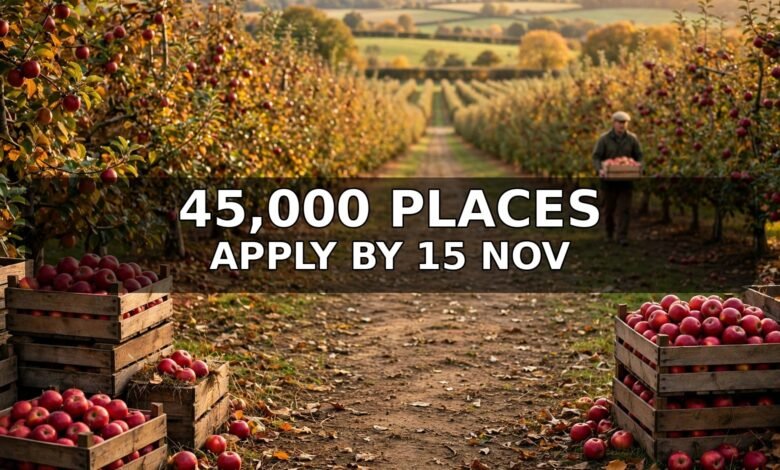
It’s 23 October. In Herefordshire tonight, orchard crews are picking the last Bramley apples under floodlights, and poultry plants are filling their Christmas lines. The UK Seasonal Worker visa has 45,000 places for 2026 — and the deadline for this year’s poultry applications is 15 November, less than a month away.
If you’ve been scrolling “UK jobs with visa sponsorship” lists at 1am, this is the guide I wish someone had handed me first: the actual rules, the real pay, the only legal way to apply, and the scams that eat people’s savings before they ever board a plane.
Quick answer
- The UK Seasonal Worker visa is the only visa route built for people with no degree, no English certificate, and no experience — legal farm and poultry work in Britain.
- 2026 quota: 43,000 horticulture places + 2,000 poultry places, scheme confirmed through end of 2029.
- Pay: at least £12.71 per hour (from 1 April 2026), with 32 guaranteed paid hours a week — a £406.72 weekly floor, roughly $17 an hour at late-2026 rates.
- Apply only through 7 licensed scheme operators. Recruitment is free by law — never pay an agent a fee.
- The catch you must hear: no family, no settlement, no switching employers — and poultry applications shut on 15 November 2026.
How many UK Seasonal Worker visas are available in 2026?
The 2026 numbers are confirmed: 43,000 visas for horticulture (fruit, vegetables, flowers, ornamental plants) and 2,000 for poultry production — 45,000 legal places total, with the scheme extended until the end of 2029.
One thing most thin guides won’t tell you: the quota is capped, and applications have been rising. Apply early through a licensed operator and you get placed; wait, and you’re refreshing WhatsApp groups full of “leftover places” sold by middlemen. How the application actually works matters more than any quota number.
What jobs can you actually do on the Seasonal Worker visa?
Two sectors. That’s it — and knowing the boundary saves you from fake offers for warehouse or care jobs “on a seasonal visa,” which don’t exist.
Horticulture covers edible and ornamental growing: soft fruits (strawberries, raspberries, blackberries), top fruits (apples, plums, cherries), field vegetables, flowers, and mushrooms. Typical tasks: planting, picking, packing, grading, greenhouse work. No experience needed — training happens on the farm.
Poultry covers production work: handling, processing, packing, and specialist butcher/dresser roles. This is the sector with the ticking clock, because poultry work is only permitted from 2 October to 31 December each year.
Where are these farms? The big hiring regions are Kent and East Sussex (orchards and soft fruit), Lincolnshire and Cambridgeshire (vegetables and packing), Herefordshire and the West Midlands (berries), and Perthshire in Scotland. Most farms provide on-site accommodation — but get the weekly deduction in writing first; it typically runs £80–£120 off your wages.
How much do seasonal workers get paid in 2026?
This is where the Seasonal Worker route is genuinely one of the fairest temporary-work schemes around — the pay rules are written into the scheme, not left to the farm’s mood.
- Minimum £12.71 per hour — the National Living Wage, from 1 April 2026. Every hour you work.
- At least 32 paid hours a week — even if weather kills a day’s picking. You’re paid for being available, not just harvesting.
- That floor is £406.72 a week guaranteed (before tax) — many workers earn more in peak season through extra hours.
- Specialist roles pay more: one scheme guide quotes poultry butchers and dressers at up to £15.88 per hour.
You’re paid through PAYE like any UK worker, so tax and National Insurance come off your payslip. One honest bit of arithmetic: if your total UK earnings stay under the £12,570 personal allowance, you can usually claim the income tax back when you leave. Seasonal workers do this every year — it’s normal, not a loophole.
Do you need English or experience for the Seasonal Worker visa?
No. This is the single biggest reason the Seasonal Worker route gets searched from Nigeria, India, Pakistan, and the Philippines more than any other UK work route. No English language test — no IELTS, no TOEFL, nothing. No degree, no prior farm experience. Basic communication helps with farm safety, and specialist driving roles need a licence, but picking, packing, and processing get taught on arrival.
What you do need: to be 18 or over, a valid passport, a job offer from a licensed sponsor, a Certificate of Sponsorship, and £1,270 in savings unless your employer certifies your maintenance. Some nationalities also need a TB test. Low bar — but real.
How do you apply for a UK Seasonal Worker visa? (The only legal path)
Read this twice, because it kills 90% of scams in one paragraph: you cannot apply by emailing farms directly, and no agent’s “connection” gets you in. Every Seasonal Worker visa runs through one of the licensed scheme operators: HOPS Labour Solutions, Pro-Force, Concordia, Agri-HR, Fruitful Jobs, RE Recruitment (poultry), and AG Recruitment. Always verify the current list on GOV.UK — lists change.
- Apply to a licensed operator, not a middleman. Use the operators’ own websites. Applying through them costs nothing — anyone charging a “recruitment fee” is breaking the rules.
- Get your job offer and Certificate of Sponsorship. The operator matches you with a farm or poultry plant and issues your CoS with role, pay, and stay length.
- Apply online on GOV.UK. You’ll need your CoS number, passport, proof of £1,270 funds (or employer certification), and TB results if required. A visa fee and the Immigration Health Surcharge apply — check GOV.UK for current amounts before you budget.
- Attend biometrics — fingerprints and photo at a Visa Application Centre in your country.
- Wait for the decision — usually within about 3 weeks of biometrics.
One more protection worth knowing: your employer must give you written employment terms before your first day — pay rate, hours, location, holiday, guaranteed minimum hours — and a contract in your own language as well as English. A farm that hands you nothing in writing is a red flag, not normal.
What’s the poultry deadline — and why does it matter right now?
- Poultry applications close 15 November 2026. The 2,000 places are done for the year after that.
- Poultry work itself only runs 2 October to 31 December. A Christmas-production visa by design — short, intense, then home.
- Horticulture is different: up to 6 months in any 12-month period, and a November 2025 rule change now lets workers return for up to 6 months in any 10-month window — better continuity across seasons.
Miss 15 November and the honest advice is: don’t pay anyone promising “leftover poultry places.” Ask the licensed operators about horticulture placements for the following season. The quota is real, the deadlines are real, and anyone selling a shortcut is selling you a refusal letter.
What the Seasonal Worker visa does NOT give you (read before you dream)
I’d rather you hear this from me than from an immigration officer. The Seasonal Worker visa is a temporary work visa, full stop —
- No settlement. This route does not lead to permanent residence. Time here doesn’t count toward it.
- No family. You cannot bring a spouse, partner, or children as dependants. The visa is for the worker only.
- No employer-hopping. You’re tied to your sponsoring operator — you can’t just switch farms without fresh approval.
- Overstaying burns everything. Staying past your visa damages future UK applications and other countries’ visa decisions. Treat it as a fixed project: earn, save, fly home on time.
If long-term UK life is your goal, the honest companion routes are the UK care worker sponsorship guide and how to find real Skilled Worker sponsors via the official register. Seasonal work is a chapter — pick the right chapter for your story.
How to spot a seasonal-work scam (the 5-second screen)
The seasonal route attracts scammers because the demand is real and the audience is far away. Run every offer through this screen:
- They ask for a recruitment or agency fee. You should not be charged recruitment fees. This is the #1 scam signal.
- They won’t name the licensed operator. Every legal placement traces back to one of the 7 licensed operators. No operator name = no placement.
- The job is outside horticulture or poultry. “Warehouse work on a seasonal visa” or “care job on a seasonal visa” doesn’t exist.
- They promise settlement, family visas, or switching. All three are false on this route.
- They pressure you to pay today. Real operators have waiting lists; they don’t need your money by Friday.
A real placement gives you a CoS reference, a written contract in your language, and time to verify everything on GOV.UK. For the general playbook on judging any job offer, our 2026 job search strategies guide has a red-flag screen built for exactly this.
Frequently asked questions
Can the Seasonal Worker visa lead to UK settlement?
No. It’s temporary — up to 6 months in horticulture, or the 2 October to 31 December window for poultry. It doesn’t count toward permanent residence and can’t be extended into settlement. Plan your return travel from day one.
Do I need IELTS or any English certificate?
No. There’s no English language requirement for the Seasonal Worker visa — no test, no certificate, no score.
How much can I realistically save on a seasonal placement?
Math, not promises: 32 guaranteed hours at £12.71 is £406.72 a week before tax and the accommodation deduction (typically £80–£120/week). Peak-season extra hours push it higher. One industry analysis puts six-month net earnings between £4,800 and £11,000 — a wide range, which is why you confirm every deduction in writing first.
Can I bring my family on a Seasonal Worker visa?
No. The route doesn’t permit dependants — no spouse, partner, or children. The visa covers the worker only.
Which companies actually recruit seasonal workers for the UK?
Only the licensed scheme operators can place you: HOPS Labour Solutions, Pro-Force, Concordia, Agri-HR, Fruitful Jobs, RE Recruitment (poultry), and AG Recruitment. Verify the current list on GOV.UK — and remember, applying through them is free.
The one honest summary
The UK Seasonal Worker visa is one of the few honest doors left for people with no degree and no English certificate: 45,000 legal places in 2026, at least £12.71 an hour, 32 guaranteed hours, a scheme locked in until 2029. The door has rules — licensed operators only, no fees, no family, no settlement, and for poultry, a 15 November deadline that moves for nobody.
If that trade sounds fair, apply through an operator this week, not a middleman. And if you want the long-term version of this story, start with the care worker and skilled-sponsor guides linked above. Either way — contract in writing, in your language, before you pack a bag.
Your Season Ends — A Website Doesn’t
Here’s a thought for the plane ride home: seasonal work pays by the hour, and the hours stop when the season does. A website is the opposite — it works while you sleep, and it doesn’t need a visa.
 🌐
Free Website
🌐 FREE Website — Turn Your Ideas Into Income
Want a handsome monthly income? Publish helpful articles consistently and let Google traffic grow into real earnings — steady work, never overnight magic. We never guarantee earnings.
Disclosure: This article contains an affiliate link. If you purchase hosting through it, we may earn a commission at no extra cost to you.
Point two: a website plus consistent, helpful articles can grow into a real monthly income through Google traffic. I’m not going to tell you it happens overnight — it takes steady publishing, not magic. But every article you write is an asset that keeps working, season after season, long after the last apple is picked.
Buy your hosting through our link above and send your receipt through the JobyRoz contact page — we’ll guide your basic business-website setup for FREE.
Disclosure: this section contains a referral link. If you buy hosting through it, we may earn a commission at no extra cost to you.
The Harvest Inspector Who Works for Apples
Every orchard crew has one worker who inspects each crate twice, never complains about early mornings, and accepts payment in apples. Ours has four paws and a professional sniffing license. Between visa deadlines, come meet the rest of the crew —
 🐶
Free Pet Guides
Before you go: run your seasonal earnings through Earnrove’s money calculators to see what 32 hours at £12.71 really leaves after deductions — and after long days in the field, Clearove’s clean-water guides remind you what actually keeps a picker going.
🧮Money Tools
🧮 Earnrove — Free Money Calculators