
Zero-Based Budgeting UK: The 2026 Beginner’s Guide That Gives Every Pound a Job (Stop the Payday Panic)

There’s a UK money creator, Beth Fuller, whose monthly videos pull thousands of views for one reason: every payday she sits down and tells her salary exactly where it’s going — mortgage, childcare, savings, family birthdays — before spending a penny. No magic, no app. That’s zero-based budgeting, and it might be the most honest method you’ve never tried.
YouGov research found 51% of UK adults have a budget for 2026 — up from 46% the year before — and 61% of them say the point is just covering the essentials. The problem isn’t that people don’t budget. It’s that most budgets are passive: a limit you glance at after the money’s gone. Zero-based budgeting flips that around.
Quick answer: Zero-based budgeting assigns every pound of your monthly income a job — bills, groceries, savings, debt, even fun — before the month starts, until income minus allocations equals exactly zero. Not spending everything; planning everything. Below: the UK 2026 beginner’s system — setup, a worked £ example, British bill traps, and a 7-day launch plan.
What Is Zero-Based Budgeting, Really?
Here’s the whole method in one sentence: income minus every planned pound equals zero.
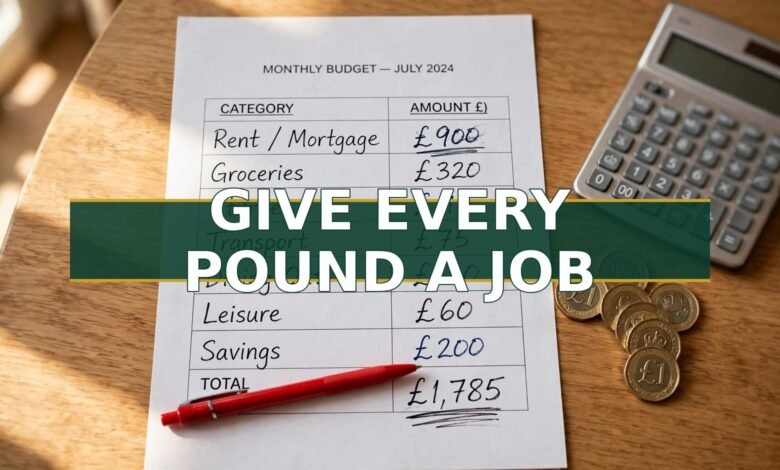
Say £1,850 lands in your account on payday. You give £900 to rent, £320 to groceries, £110 to utilities, £75 to transport, £120 to eating out, £60 to leisure, £200 to savings, and the last £65 to a buffer pot. That’s £1,850 allocated. Nothing floating around unassigned. Zero left to “accidentally” spend. The zero isn’t deprivation — it’s proof nothing was left to chance.
A normal budget says “try not to spend more than £320 on groceries.” A zero-based budget says “£320 is going to groceries — decided on payday, on purpose.” One reacts; the other decides. YNAB, the app built around this method, reports new users save an average of $600 in their first month. Their figure, not a guarantee — but a hint of what changes when every pound has a job.
How Do You Start Zero-Based Budgeting in the UK? (7 Steps)
Most guides explain this in dollars with categories that don’t match British life. Here’s the UK version.
Step 1: Your real monthly income. Not your salary — your take-home pay. Include wages, side-hustle money, Child Benefit, freelance income. If your income wobbles, budget off your lowest realistic month and treat the rest as a bonus to assign when it arrives. Full playbook: how to budget on irregular income.
Step 2: Fixed bills first. Rent or mortgage, council tax, energy, water, broadband, mobile, insurance, subscriptions, TV licence if you watch live TV. Then scan last month’s bank statement for the ones memory skipped — one forgotten £40-a-month line costs nearly £500 a year.
Step 3: Variable costs with real numbers. Groceries, transport, eating out, personal care. Use last month’s actuals, not aspirations. If you spent £410 on groceries, writing £250 is fiction, and fiction is why budgets fail.
Step 4: Savings and debt get a job first. Before a single pound goes to fun, assign money to the emergency fund, debt repayments, and sinking funds. “I’ll save what’s left” saves nothing. Paying yourself first is the whole trick.
Step 5: Assign the rest until you hit zero. Discretionary spending goes last — and “fun money” is a legitimate line item. A budget with no joy dies by February. Negative? Trim variable categories. Positive? Give the leftover a job immediately, or it evaporates.
Step 6: Build in a buffer line. Even £25–£50 a month. This stops a surprise MOT bill or a bigger shop from nuking the plan. Our sinking funds guide covers costs that don’t hit every month.
Step 7: Review weekly, rebuild monthly. Five minutes a week keeps you honest; a monthly rebuild keeps it matching real life. It’s called zero-based because you start from zero every month — no category survives just because it existed last month.
A Worked £ Example: £1,850 a Month
A fully worked illustrative example for a single renter:
- Rent: £900
- Council tax: £120
- Energy + water + broadband: £150
- Mobile + subscriptions: £45
- Groceries: £280
- Transport: £90
- Eating out + takeaways: £80
- Personal care + household: £40
- Debt repayment: £100
- Savings (emergency fund): £150
- Sinking funds (annuals ÷ 12): £60
- Fun money: £60
- Buffer: £65
- Left unassigned: £0 ✓
Total: £1,850 allocated. Savings, debt and sinking funds are assigned before fun money. Your numbers will differ — the structure is what matters.
The UK Bill Traps That Wreck Zero-Based Budgets
Council tax over 10 months. Many councils default to 10 payments, leaving two bill-free months — and a shock when you forget which. Match your categories to your actual payment pattern.
The five-week month. Some months hold an extra weekend of spending or a fifth weekly-pay cycle. Paid monthly but spend weekly? Budget the extra week in, or discover it on the 29th.
Annual bills divided by nothing. Car insurance, MOT, boiler service, TV licence, Christmas — divide each by 12 into a sinking fund. Ignore annuals and the budget is wishful thinking.
Direct debit sequencing. Bills leave on different dates. The monthly plan still needs one check: will the account actually hold cash on each debit date? Move the big ones to just after payday where you can.
The “miscellaneous” sponge. Every budget has a line that quietly absorbs overspend. When it blows past its limit two months running, that’s data, not failure. Reassign the number, not the guilt.
Zero-Based Budgeting vs the 50/30/20 Rule
50/30/20 (50% needs, 30% wants, 20% savings) is the other method everyone quotes. It’s brilliant for beginners — simple, maintainable, a quick ratio sense-check. But with committed spending swallowing most of a typical UK household’s income, the 50% “needs” bucket is often blown before you start.
Zero-based is the precision end. If 50/30/20 says save 20%, zero-based says exactly where that 20% goes — £100 to the emergency fund, £60 to sinking funds, £40 to the credit card overpayment. One gives you a target; the other gives you a plan. Honest take: start with 50/30/20 if you’ve never budgeted, move to zero-based when you’re ready to know where every pound actually went.
Is It Any Good on a Low or Irregular Income?
Yes — with one caveat. On a tight month you prioritise essentials and give savings a smaller-but-real job, even £10. It doesn’t require wealth, just honesty. What it can’t do is create money that isn’t there. If income genuinely doesn’t cover essentials, chase the income side — unclaimed benefits, extra earning routes — not a different budgeting app. If you’re living paycheck to paycheck, this method is the flashlight, not the fix.
For irregular income, budget off your lowest normal month and assign the surplus only when it arrives — lean months never break the plan. On fluctuating Universal Credit, pair this with our cash stuffing guide for the physical-spending categories.
Your 7-Day Launch Plan
Day 1: Write down your real monthly take-home figure. Just the number.
Day 2: Export last month’s statement. Highlight every outgoing; circle the three you’d forgotten.
Day 3: List your categories — 12 to 15 is plenty. A notebook or spreadsheet is fine; 39% of UK budgeters still use manual tools.
Day 4: Assign amounts until income minus allocations equals zero. If it won’t balance, trim the fun lines — not the savings lines.
Day 5: Set up the mechanics: savings move the day after payday, direct debits on sensible dates, named pots (Monzo Pots, Starling Spaces).
Day 6: Write your buffer rule: what it’s for, and the rule that savings are never borrowed without a written repayment date.
Day 7: First 5-minute weekly check. Adjust one category. The habit is the method.
6 Mistakes That Make People Quit (And Who Should Skip This)
1. Too detailed, too soon. Start with 12–15 broad categories. Simplicity you maintain beats precision you abandon.
2. Forgetting irregular expenses. Annual bills, birthdays, car repairs need a monthly slice. This is the number-one killer of zero-based budgets.
3. Budgeting aspirations, not life. £250 groceries when you spend £410 isn’t a budget; it’s a wish. Start from reality, improve gradually.
4. Cutting fun to zero. A £60 fun line you stick to beats a £0 fun line you blow past. Joy is load-bearing.
5. Never adjusting. The method expects monthly rebuilds. Same numbers in March as January means you’re decorating a spreadsheet, not budgeting.
6. Quitting after one bad month. An overspent category is information, not failure. Reassign and move on.
Honesty bit: skip this if weekly check-ins sound like a chore — you’ll burn out; use 50/30/20 or a tracker instead. In a financial crisis with creditors calling, budgeting comes after free debt advice (StepChange, Citizens Advice). Precision tool, not lifeboat.
Frequently Asked Questions
Do I need an app to do zero-based budgeting in the UK?
No — a notebook, printed sheet, or basic spreadsheet works; the method matters more than the tool. YNAB is built around zero-based budgeting (around £90/year in the UK), EveryDollar is the free alternative, and Monzo Pots or Starling Spaces add digital-envelope structure inside your bank. Free template options are everywhere.
How long does a zero-based budget take each month?
Thirty to sixty minutes for setup, then five minutes a week and 20–30 minutes to rebuild monthly. Taking longer? You’ve made it too detailed — simplify.
What happens if I overspend a category?
You reassign: move money from another category, note what changed. Not cheating — the method working. Every pound still has a job.
Can I do zero-based budgeting if I’m paid weekly?
Yes. Budget off four weeks of pay as your baseline, and treat five-pay months as bonus months — the extra week’s pay goes straight to savings or debt. Categories stay the same; only the income line changes.
Is zero-based budgeting better than cash stuffing?
They’re cousins, not rivals. Zero-based is the planning system — it decides where every pound goes. Cash stuffing is the enforcement system — it stops you spending more than the plan. Run the zero-based plan on paper and cash-stuff the spending categories, and they combine well.
Conclusion
Zero-based budgeting won’t make you rich — anyone who says a budgeting method will is selling something. But it ends the familiar misery of reaching the 24th wondering where it all went. You’ll know, because you decided in advance.
Start small: one month, fifteen categories, honest numbers. Review weekly, rebuild monthly, and give the buffer a real job. It slots in alongside the rest of our Personal Finance guides — the operating system the other tactics run on. And if you try it for a month and hate the weekly check-ins, that’s useful information too. The best method is the one you’ll actually use in February, not the one that looks perfect in October.
Run Your Budget Like a Business: Get a Free Website
Here’s something the zero-based method teaches you: every pound should have a job — and one of the hardest-working pounds you’ll ever spend is the one that buys your business a proper website. These days a website isn’t a luxury; it’s how customers find you, trust you, and buy from you. Setting one up is genuinely simple: grab hosting through our link below, tell the built-in AI what your business does, and it builds the website for you — no coding, no designer fees.
 🌐
Free Website
🌐 FREE Website — Turn Your Ideas Into Income
Want a handsome monthly income? Publish helpful articles consistently and let Google traffic grow into real earnings — steady work, never overnight magic. We never guarantee earnings.
Disclosure: This article contains an affiliate link. If you purchase hosting through it, we may earn a commission at no extra cost to you.
And if you’d like your money to start working harder each month, a website plus consistent helpful articles is one of the most realistic routes there is. Google traffic can grow into monthly income over time — but it takes steady publishing, not overnight magic, and nobody honest will guarantee you earnings. Think of it like a budget category you fund month after month: the results compound.
Buy your hosting through our link above, send us your receipt through the JobyRoz contact page, and we’ll personally guide your basic business website setup for FREE.
Disclosure: this post contains affiliate links. If you buy through them, we may earn a commission at no extra cost to you.

The Auditor Who Counts Every Treat
This border collie reviews his treat budget every single evening. One paw on the spreadsheet, zero tolerance for unassigned snacks — if a biscuit isn’t in the plan, it doesn’t exist. When did you last audit where your money actually went?
 🐶
Free Pet Guides
Run the numbers first: our friends at Earnrove have free budget and savings calculators that pair perfectly with a zero-based plan — and if the whole budgeting session made you thirsty, Clearove has the clean-water guides your kitchen deserves.
🧮Money Tools
🧮 Earnrove — Free Money Calculators